Kentucky distillery shipping rules for online bourbon sales.
A Kentucky distillery can ship bourbon to Kentucky customers with a direct shipper license, and to the few other states that accept spirits shipments, each on its own terms and only while those terms last. Here is what the law says, what it means for selling bourbon online, and what your website has to do. It is a plain-English guide, not legal advice.
Or call or text (502) 387-1142


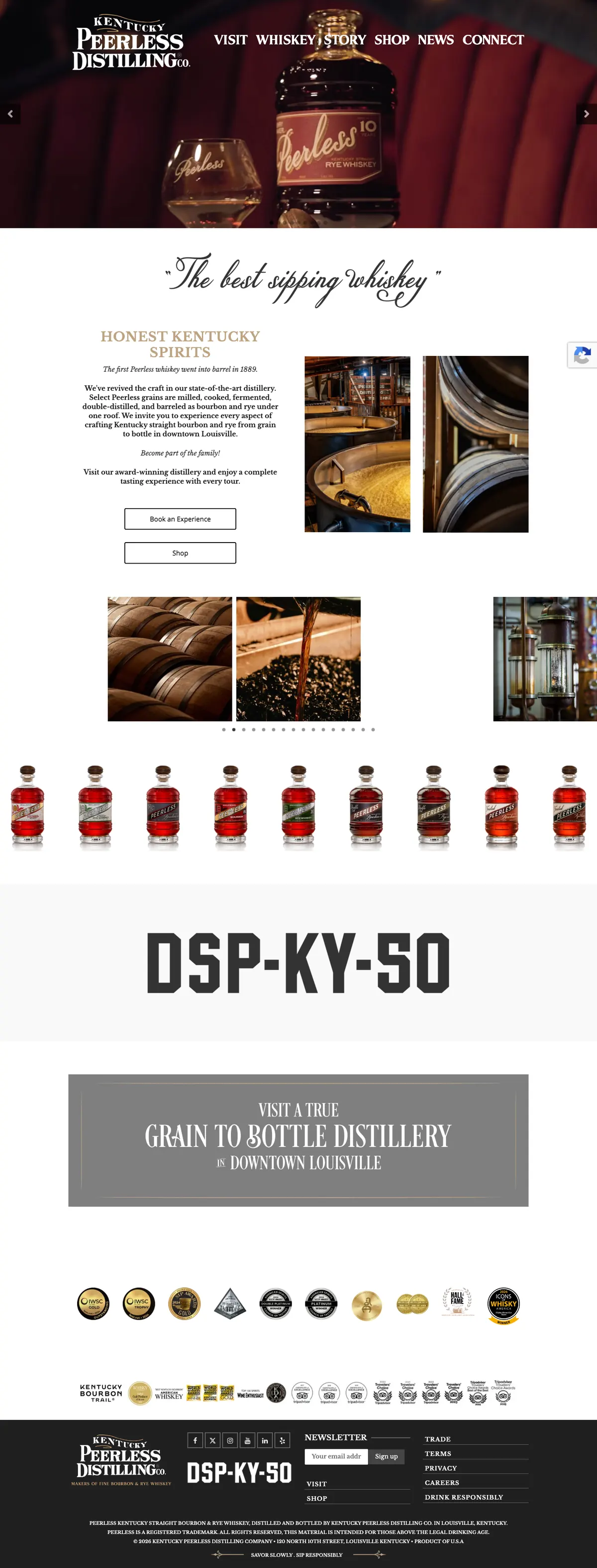

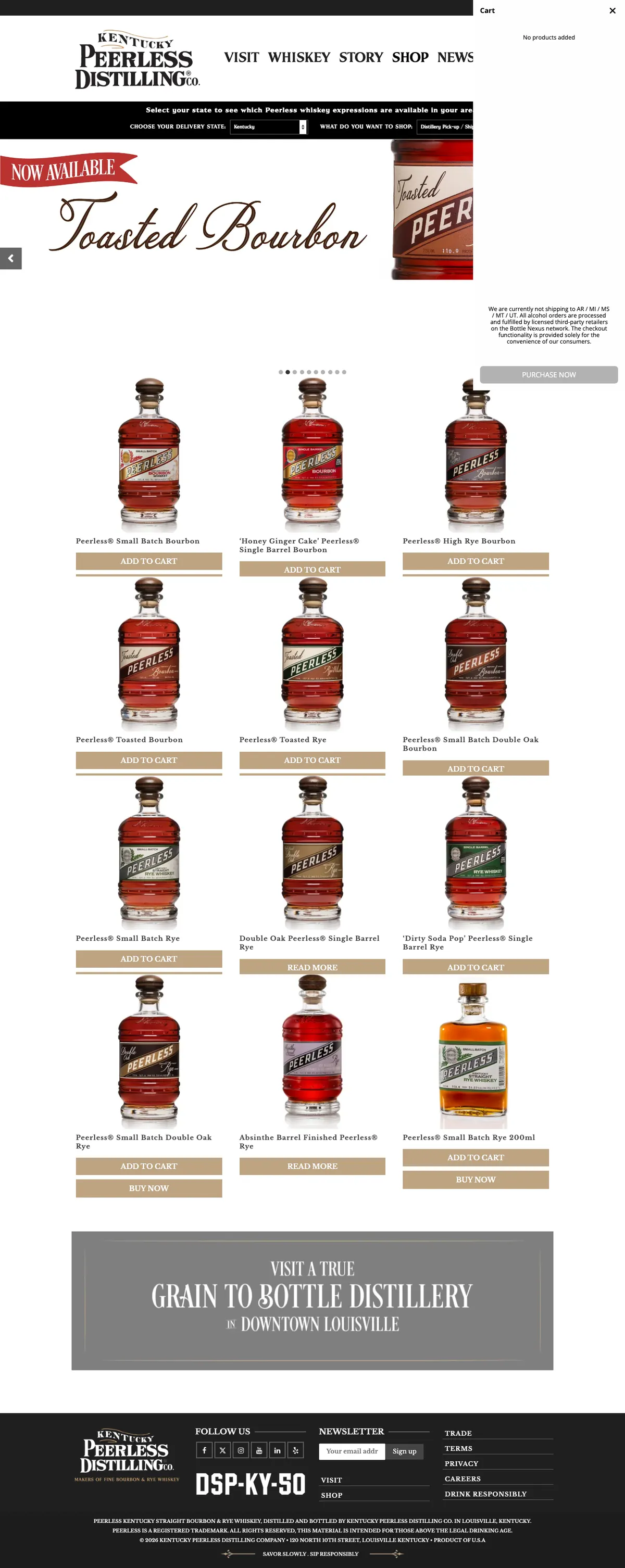
Websites I have built for Kentucky businesses


















The short answer
A Kentucky distillery can ship bourbon to consumers, with limits. Since 2020, Kentucky law has let licensed producers, Kentucky distilleries included, ship alcohol straight to Kentucky consumers under a direct shipper license. Under KRS 243.028, spirits are capped at 10 liters per consumer per month, shipments must go by common carrier, and the carrier has to check ID and collect the signature of someone 21 or older.
Shipping to other states depends on each state’s own law. Sovos ShipCompliant counted nine states plus Washington, DC accepting direct-to-consumer spirits shipments as of October 2025, and California opened a one-year window for qualifying craft distillers in 2026. That count is a dated snapshot, not standing permission. Everything below is general information, not legal advice. Confirm your plan with counsel or a compliance service before selling bourbon online.
Where Kentucky distillery shipping law came from
Kentucky’s rules for shipping alcohol to consumers live in KRS 243.027 to 243.029. They were created by House Bill 415 in 2020, which became law without the Governor’s signature and took effect July 15, 2020. A second bill, also numbered HB 415, rewrote parts of the law in 2021, most notably removing the ban on using third-party fulfillment houses. The statutes have been amended in later sessions too, most recently in 2025.
The license is called a direct shipper license, and the Type A version covers alcoholic beverages. Under KRS 243.027 it is open to:
- Manufacturers located in Kentucky or any other state that hold a current license in their home state.
- Certain licensed alcoholic beverage suppliers, for products where they are the primary source of supply.
A manufacturer can ship only brands it owns or exclusively licenses, and only if it produced them, had them produced under a written contract, or bottled them or had them bottled. A Kentucky distillery shipping its own bourbon to a Kentucky customer fits squarely inside that.
The limits and delivery rules in KRS 243.028
KRS 243.028 sets the practical rules every shipment has to follow:
- Volume: a direct shipper may send a consumer up to 10 liters of distilled spirits per month. Wine and malt beverages are capped at 10 cases each.
- Notice to the buyer: the shipper must tell the customer that the package will not be left unless the person receiving it shows valid ID proving they are at least 21.
- Labels: every container must be marked “CONTAINS ALCOHOL: SIGNATURE OF PERSON AGE 21 OR OLDER REQUIRED FOR DELIVERY.”
- ID and signature at the door: the person delivering must inspect the ID, by eye or with age verification technology, and collect a signature. The person who signs does not have to be the buyer.
- No dry areas: a shipper may not ship to an address in an area where that type of beverage may not be sold or received. Kentucky’s ABC offers a wet or dry status lookup for direct shipper addresses, and says the tool should not be the only check you rely on.
- Common carrier only, and anything the carrier cannot deliver goes back to the shipper.
The law also puts some weight on the buyer: a consumer who intentionally has alcohol shipped to an unlawful address faces a fine of two hundred fifty dollars for a first offense and five hundred dollars after that.
Licensing, records and taxes
Holding the license comes with paperwork that your store’s data has to support. Under KRS 243.027 a direct shipper must:
- Agree that the Kentucky Secretary of State serves as its agent for legal service.
- Keep records and allow the ABC and the Department of Revenue to audit them or inspect the licensed premises.
- Register with the Department of Revenue and file the reports and pay the taxes the law requires.
- Send a quarterly report showing the total shipped per consumer, each consumer’s name and address, the purchase price and taxes charged, and each carrier’s name and address.
- Renew every year with a current copy of its home-state license.
Since the 2021 changes, a licensee can use a third party to fulfill shipments. That third party does not need its own alcohol license, but the shipper stays liable for any violation the third party commits. The ABC also gives licensed carriers a quarterly list of active direct shippers, which is one reason unlicensed shipping is a bad bet.
Which other states accept direct spirits shipments
Kentucky’s law covers shipping into Kentucky. Shipping a bottle to someone in Ohio, Texas or New York is governed by that state’s law, and most states still do not allow direct-to-consumer spirits shipments at all. Far fewer states accept spirits than accept wine.
As of October 2025, Sovos ShipCompliant listed these as allowing direct-to-consumer spirits shipping:
- Alaska, Arizona, Kentucky, Nebraska, New Hampshire, New York, North Dakota, Rhode Island and Vermont
- Washington, DC
Many come with conditions. Common ones are production caps that only craft-size producers meet, reciprocity rules that require your home state to offer the same privilege back (Avalara’s state-by-state guide notes this for New York), bans on shipping into dry or moist communities, and Rhode Island, where Avalara’s guide says the buyer must order in person at the producer. Trackers do not always agree on every state, which is exactly why this list needs checking with a compliance service before you ship. Treat it as a dated snapshot, not standing permission: a state can change its law, and being on the list does not mean your distillery qualifies there.
California’s 2026 window
California’s ABC began issuing a Type 94 direct shipper permit for 2026. It covers California craft distillers and qualifying out-of-state distillers that meet California’s craft conditions, including making no more than 150,000 gallons of distilled spirits a year. Shipments are limited to 2.25 liters per consumer per day, with an adult signature and a warning label. The authorization is scheduled to end on January 1, 2027 unless the legislature extends it.
Getting the bottle there: carriers
Kentucky requires direct shipments to go by common carrier, and the carriers set their own rules on top of the law, which can change:
- The Postal Service cannot carry liquor. Intoxicating liquors are nonmailable under federal law, as USPS Publication 52 spells out.
- FedEx carries spirits only between licensees. Its alcohol shipping page says its program delivers wine to consumers, but spirits go licensee to licensee.
- Any carrier you use has to check ID and collect an adult signature to satisfy KRS 243.028, and alcohol shipping usually requires a separate agreement with the carrier.
Your compliance provider will know which carrier programs deliver spirits to consumers in the states you plan to serve. Set up shipping in your store around that answer, not the other way around.
Other legal ways to sell bourbon online
Direct shipping is only one channel. Shop Peerless, the store I built and run for Kentucky Peerless Distilling, offers three ways to buy:
- Distillery pickup, sold online and collected in person.
- Direct shipping on the distillery’s own inventory, only where it is legal, gated by state and routed through a compliance integration.
- Partner shipping through a licensed retailer, presented as its own catalog and checkout.
The hard part is keeping a bottle from slipping into the wrong channel. Which channels fit your license is a question for your compliance advisor; keeping them apart is a website job.
What your website has to do
The law is enforced at the door, but the checkout decides which orders ever reach it. A store selling bourbon online, on WooCommerce or anything else, should:
- Confirm age on entry and again in the purchase flow, and keep a record of what was confirmed.
- Check the address before payment: allowed state, no dry area, and the right channel for that address.
- Count the limits: per-product bottle limits for allocated releases, and the per-consumer monthly caps the law sets.
- Tell the buyer that an adult signature and ID will be required at delivery, at checkout and in the order email.
- Keep clean records of who bought what, where it went, what tax was charged and which carrier took it, so the quarterly report is an export instead of a project.
I wrote up how I build each of those checks on the age verification and compliant checkout page.
A checklist before your first shipment
- Confirm with counsel or a compliance service which states and channels your licenses allow.
- Apply for a Kentucky direct shipper license through the ABC, and register with the Department of Revenue.
- Choose a compliance service and a carrier program that delivers spirits to consumers.
- Build those rules into your store: age checks, state and dry-area rules, limits and separate channels.
- Test with real addresses, including a closed state, a dry address and an order over the limit, before going live.
- Set up the order export your quarterly report needs, then check it against the first quarter’s actual shipments.
I build and run spirits stores from Louisville. If you want a second set of eyes on yours, I am happy to look.
Frequently asked questions
Does a Kentucky distillery need a license to ship bourbon to Kentucky customers?
Yes. Shipping alcohol directly to Kentucky consumers requires a direct shipper license from the Kentucky Department of Alcoholic Beverage Control, plus registration with the Department of Revenue.
How much bourbon can one customer receive?
Under KRS 243.028, a direct shipper may send a consumer up to 10 liters of distilled spirits per month. A cart rule can count that per customer so an order over the limit stops before payment.
Can I ship bourbon to a dry county in Kentucky?
No. The law bars shipping to an address in an area where that type of beverage may not be sold or received. Kentucky’s ABC has a wet or dry status lookup for direct shipper addresses.
Can an out-of-state distillery ship into Kentucky?
Yes. A manufacturer licensed in its home state can get a Kentucky direct shipper license by showing proof of that license, then follow the same limits, labeling and delivery rules.
Can I use a fulfillment house to ship my bottles?
Since the 2021 changes, yes. The third party does not need its own alcohol license, but the direct shipper remains liable for any violation it commits.
Is this guide legal advice?
No. It is a plain-English summary of the statutes and published sources as of October 2026. Laws and carrier rules change, so confirm your plan with an attorney or a compliance service before you ship.
Shop Peerless: bourbon, shipped legally, sold beautifully.
Shop Peerless sells small-batch bourbon and rye direct to consumers. The store gates entry and validates age in the purchase flow, backed by carrier-side checks on delivery. Shipping is gated by state and routed through a compliance integration, bottle limits are enforced in the cart, and inventory follows the distillery’s Clover register every hour.
I designed the store, run it and shot the bottle photography on it, and I keep the systems that hold its three channels apart working on release days.

Selling bourbon online? Let me look at your store.
Tell me your channels and the states your compliance plan allows. I will tell you what the store needs to follow those rules, from the person who built Shop Peerless.