The best law firm websites, and what each one does right.
A law firm website has one job: make a stranger in a stressful moment comfortable enough to call. These twelve do that job well, from the largest firms in the country to Louisville practices, and each has at least one idea a smaller firm can borrow.
Or call or text (502) 387-1142
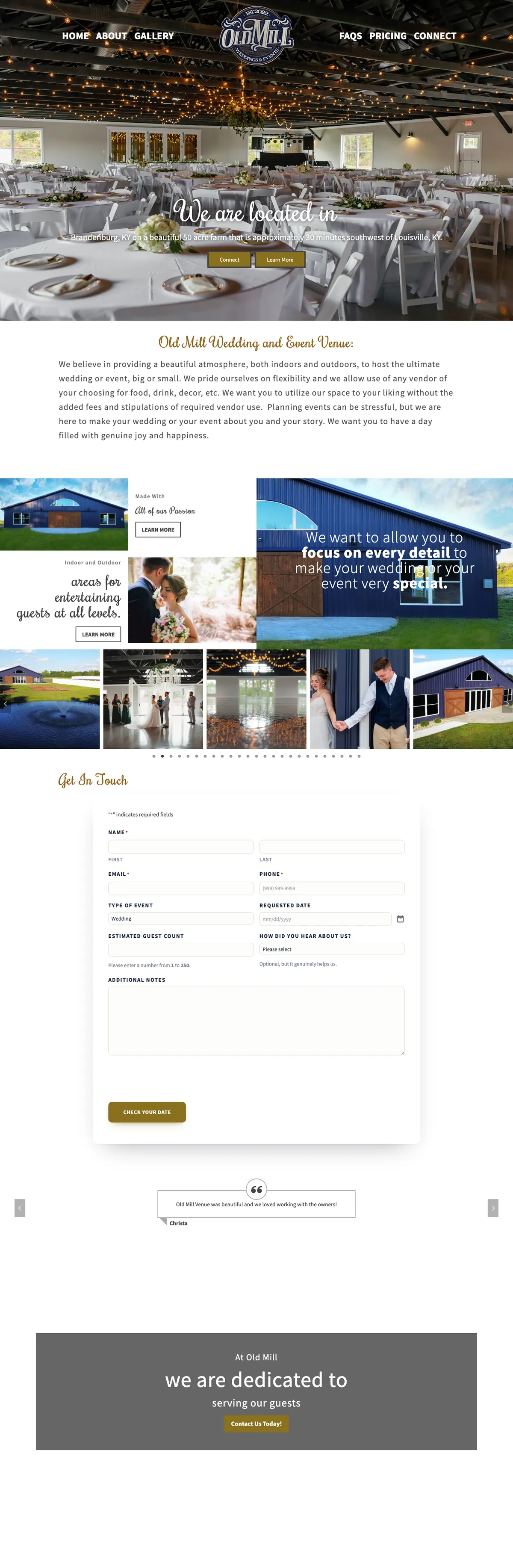
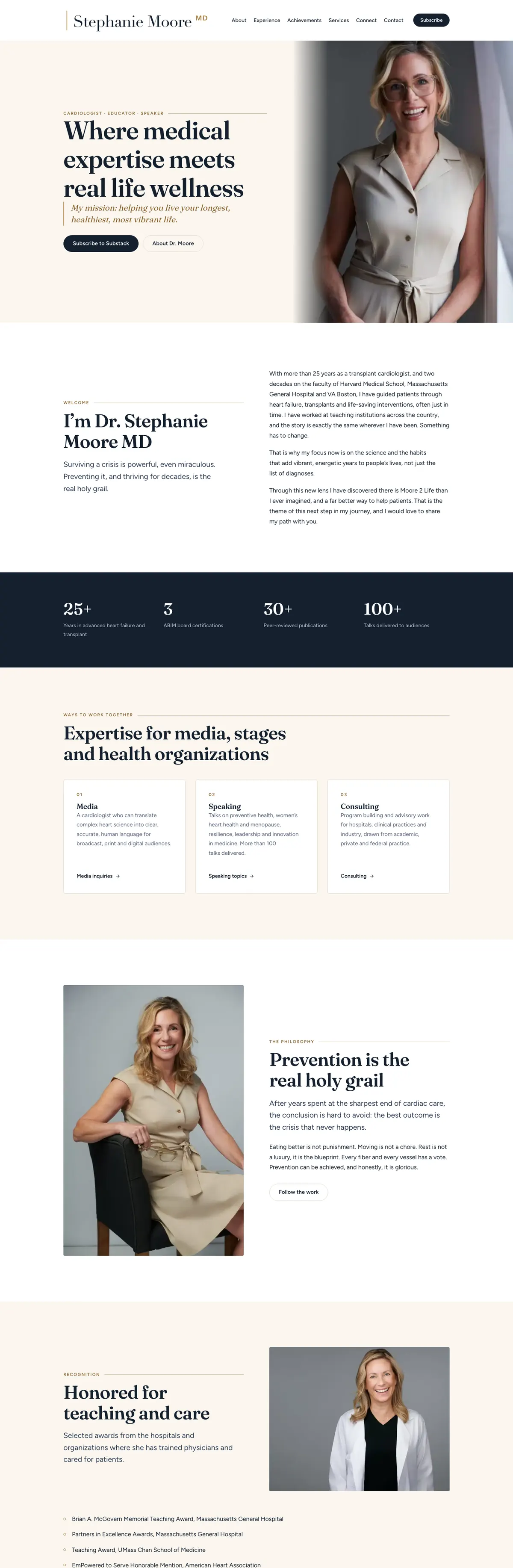


Websites I have built for Kentucky businesses


















The short answer
The best law firm websites earn trust in the first five seconds, make it obvious what the firm handles, let a prospective client reach a person from a phone, and show proof (reviews, results, credentials) with the required fine print placed right beside it.
The examples below include national firms, big-law firms and Kentucky practices, plus two Louisville sites I built, labeled as mine. None of this is legal advice: advertising rules differ by state, and what one firm shows may not be allowed in yours.
How I judged the best law firm websites
I visited every site on this page in October 2026 and judged it the way a prospective client does, usually on a phone and usually in a hurry. Sites change, so treat each note as a snapshot from that month and follow the link to see the site as it is today:
- Trust in five seconds. Does the first screen look like a firm you would hand your problem to?
- Practice areas you can find. Can a visitor tell within one scroll what the firm handles and where?
- Intake that works from a phone. A tap-to-call number, a short form, and an honest promise about what happens next.
- Proof with its fine print. Reviews, results and credentials, with any required disclaimer next to the claim rather than buried in the footer.
- Help beyond the sales pitch. Directions, a named lawyer, answers to real questions.
Some of these firms spend more on marketing in a month than a solo practice spends in a decade. The point is not to copy their budget. It is to copy the specific decisions that make their sites work.
Morgan & Morgan: proof with the fine print right beside it
Morgan & Morgan is a national personal injury firm with offices across the country, including Kentucky. Its site is built for one action. The header carries the phone number with a note that the line is open around the clock, and the case evaluation form asks for only a name, phone, ZIP code, email and case type.
What makes it worth studying is how it handles proof. Results appear as cards comparing the insurer’s offer with the final verdict, including a Louisville case. Every claim carries its qualifier next to it: a results-may-vary note beside the results, a note beside attorney videos that the lawyer may not be licensed in your state, and an attorney advertising notice in the footer. Practice pages also carry an attorney-reviewed line with a name and a date.
Borrow this: put each disclaimer beside the claim it qualifies, and date and sign the pages a lawyer has reviewed.
Cravath and Kirkland & Ellis: restraint, and a directory built for clients
Cravath, Swaine & Moore, New York
Cravath’s site says very little, on purpose. The main menu has four items, practices are split into two buckets, corporate and litigation, and the only proof on the homepage is a short carousel of recent deals and cases. The footer carries an attorney advertising notice. For a firm whose clients already know the name, restraint is the message.
Kirkland & Ellis
Kirkland’s lawyer directory is the part to study. Visitors can filter attorneys by practice, office, bar admission, law school and languages spoken. A firm with one office can borrow the idea at small scale: if anyone in the firm speaks Spanish, Vietnamese or Arabic, say so on the bio and make it findable.
Borrow this: say less, prove it with recent work, and make the lawyers searchable by the things clients care about.
Stites & Harbison, Louisville: service promises in writing
Stites & Harbison traces its roots in Louisville back to 1832, and its site does something few firms of any size do: it publishes its service promises. A full page lists the firm’s ten imperatives of client service, such as being responsive, communicating, and recovering from service errors.
The practical details are handled well too. All thirteen offices and their phone numbers sit in the footer, the attorney directory filters by capability, office and bar admission, and before a visitor can email the Louisville office the site asks them to confirm they understand that an email does not create an attorney-client relationship.
Borrow this: write down how you treat clients, in plain words, and publish it. It is the one claim every visitor can test.
FBT Gibbons and Bricker Graydon Wyatt: help for business clients
FBT Gibbons, formerly Frost Brown Todd
The old Frost Brown Todd address now forwards to FBT Gibbons. The site organizes much of its work by the client’s industry, such as energy, finance, life sciences and manufacturing, so a business owner can start from their world instead of legal vocabulary. Each office on the locations page gets a photo, address, phone and a directions link, including the Louisville and Lexington offices. A contact notice warns visitors not to send details of a matter before the firm has agreed to take it on.
Bricker Graydon Wyatt, Louisville office
Wyatt, Tarrant & Combs is one of the firm’s predecessors, and the Louisville office page shows a small kindness that almost nobody bothers with: written directions for driving in, where guest parking is, and which floor reception is on.
Borrow this: organize around the client’s industry or problem, and tell first-time visitors exactly where to park.
Kentucky injury firms: Sam Aguiar, Gary C. Johnson and Hughes & Coleman
Sam Aguiar Injury Lawyers, Louisville
Aguiar’s intake on aguiarinjurylawyers.com is the strongest local model I found. The footer invites people to call or text at any hour, the form asks only five things, and the site states how quickly a caller reaches a live person. There is a Spanish page. The Louisville car accident page is written for Louisville, covering steps in Jefferson County, roads like I-264, Dixie Highway and Bardstown Road, Kentucky statutes and a nine-question FAQ.
Gary C. Johnson, Pikeville, Hazard, Lexington and Louisville
On garycjohnson.com, the footer carries a plain advertisement notice. The results page explains, honestly, that many cases settled after trial for less than the jury’s verdict. And the contact form’s referral question includes AI chat as an option, which tells the firm how many clients now arrive from an AI assistant.
Hughes & Coleman, Kentucky and Tennessee
On hughesandcoleman.com, attorney bios include a photograph, education, bar admissions and a personal story, and the offices are listed by state and city so a client in Elizabethtown or Bowling Green sees a local door.
Borrow this: write practice pages for your own county’s roads, courts and statutes, and track where inquiries come from, including AI assistants. If you show results, check your own rules first.
Morgan Pottinger McGarvey, Louisville: lead with what you are known for
Morgan Pottinger McGarvey has served clients from Louisville since 1974, and its homepage headline does what most firm headlines avoid: it names the one thing the firm is known for, banking and finance law, then says it handles much more.
The personal injury page names the lawyer who handles those cases, with his direct line and an email link, so a visitor knows exactly who they will talk to. The contact form asks the visitor to confirm they have read the disclaimer before sending.
Borrow this: lead with your strongest practice instead of a list of everything, and put a named lawyer with a direct line on each practice page.
Two Louisville law firm websites I built
These are my own work, so judge them by the same five tests.
- Justin Gooch Law (my client: a site I built). A Louisville practice handling personal injury, criminal defense, and wills and estates, each on its own practice-area page so the site answers the search instead of making people hunt. Every photograph on it is mine. It is mobile-first, fast and hardened, with a path to a consultation on every page, and the firm updates its own content without calling a developer. Read the Justin Gooch Law case study.
- Todd Lewis Law (my client: a site I built and host). A solo practice that did not need a flagship build: who, what, where and how to call, done well, with every page leading to the phone number and the form. When it moved onto my server in September 2026, homepage response dropped from as much as 1.95 seconds to 0.16. Read the Todd Lewis Law case study.
One is a full practice site, the other a lean one. Both are the right size for the firm, and that is the lesson: the best law firm website is the one sized to the practice, not the biggest one you can afford.
What to take for your own firm
If you only make five changes after reading this, make these:
- A first screen that says who you help and where, with a real photograph of a real lawyer.
- A page for each practice area you want more of, written for your county and your clients’ questions.
- Intake that works with one thumb: tap to call, a five-question form, and a plain note about what happens next.
- Proof with its fine print beside it, checked against your state’s advertising rules. In Kentucky, start with Kentucky attorney advertising rules for law firm websites.
- One practical kindness, such as parking directions, a named lawyer’s direct line, or a Spanish page.
If you are weighing a new site, what a law firm website costs walks through the decisions that set the price, and law firm website design is how I build them.
Frequently asked questions
What makes a law firm website one of the best?
It earns trust quickly, makes the practice areas obvious, lets a prospective client reach a person from a phone, and shows proof with any required disclaimers placed beside the claims. Speed and clarity matter more than visual effects.
What should every law firm website include?
A page for each practice area you want more of, attorney profiles with real photographs, reviews and results where your rules allow, a phone number and short form on every page, the disclaimers your bar requires, and fast pages that work on a phone.
Can a solo practice website compete with big firm websites?
Yes, by being specific. A solo attorney can write practice pages for one county, put their own direct line on every page and answer local questions that national firms never get to.
Can a law firm website show case results and reviews?
Often, with conditions that vary by state, such as disclaimers that past results do not guarantee future outcomes. Check your own state’s rules before publishing results or testimonials.
Are the firms on this page clients of yours?
Only Justin Gooch Law and Todd Lewis Law, and they are labeled as sites I built. The others are independent firms I chose because their websites do something well.
A solo practice site, sized to the practice.
Todd Lewis Law did not need a flagship build. It needed credibility, clarity and a working phone number, on a page that loads instantly. These are current captures of the live site on a desk and a phone.
Behind it: Cloudflare in front, encryption end to end, a homepage cut from 4.7 MB to 1.3 MB, all 41 pages verified after the move and offsite backups.

Want your firm’s site on a list like this?
Tell me what the practice handles and who you need to reach. I will tell you what I would change first, and what it would take, from the person who would build it.