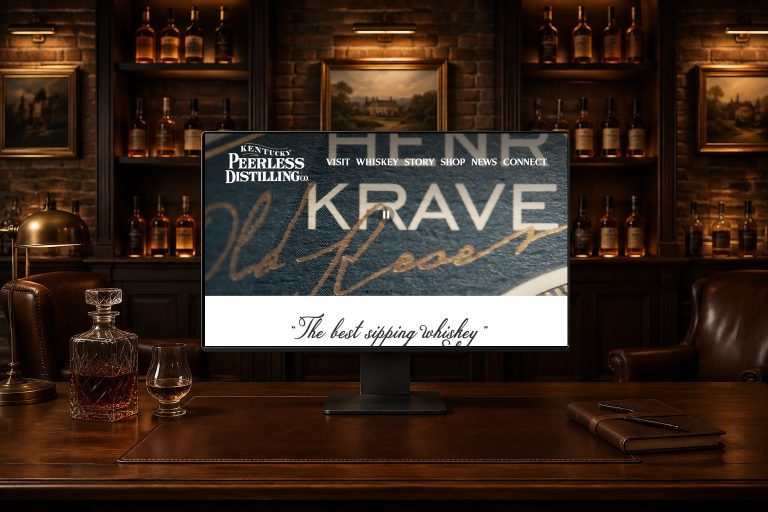
The best Kentucky distillery websites, and what each one does right.
A distillery website has to sell a visit, a bottle and a story, behind an age gate, to people planning a trip from three states away. These Kentucky distilleries do parts of that exceptionally well. Here is what each one gets right, written by someone who runs one of these sites from the inside.
Or call or text (502) 387-1142
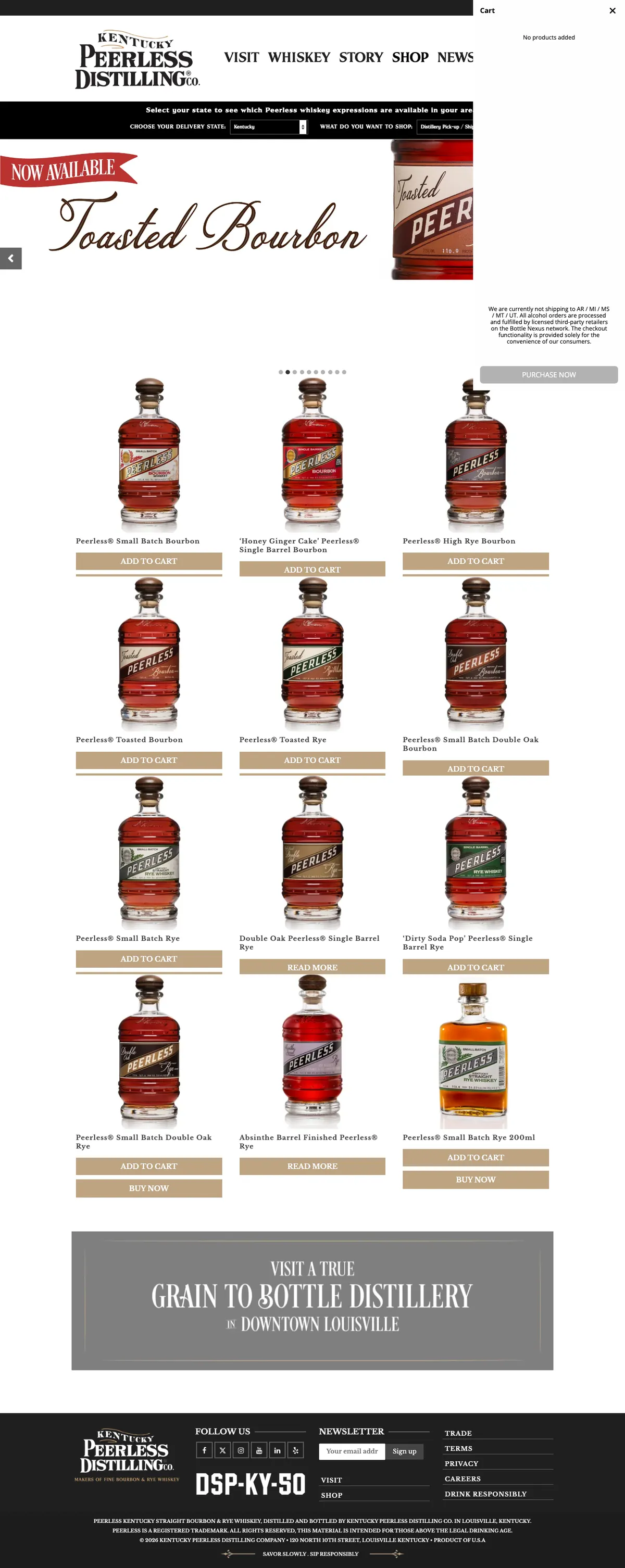

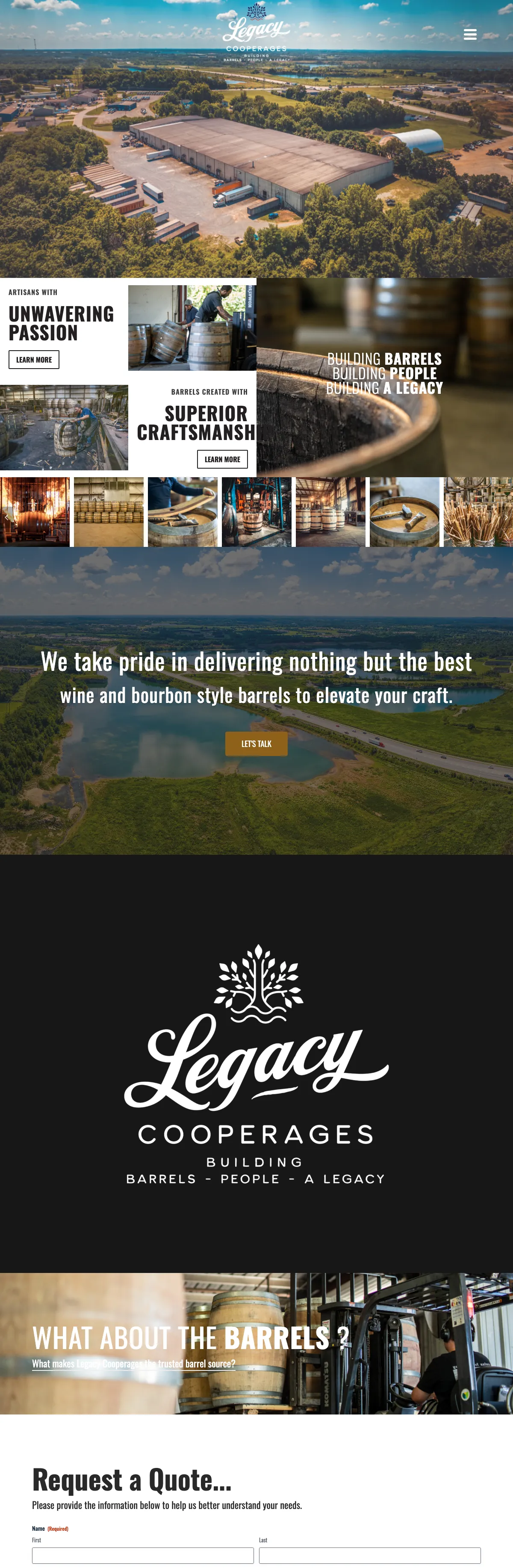

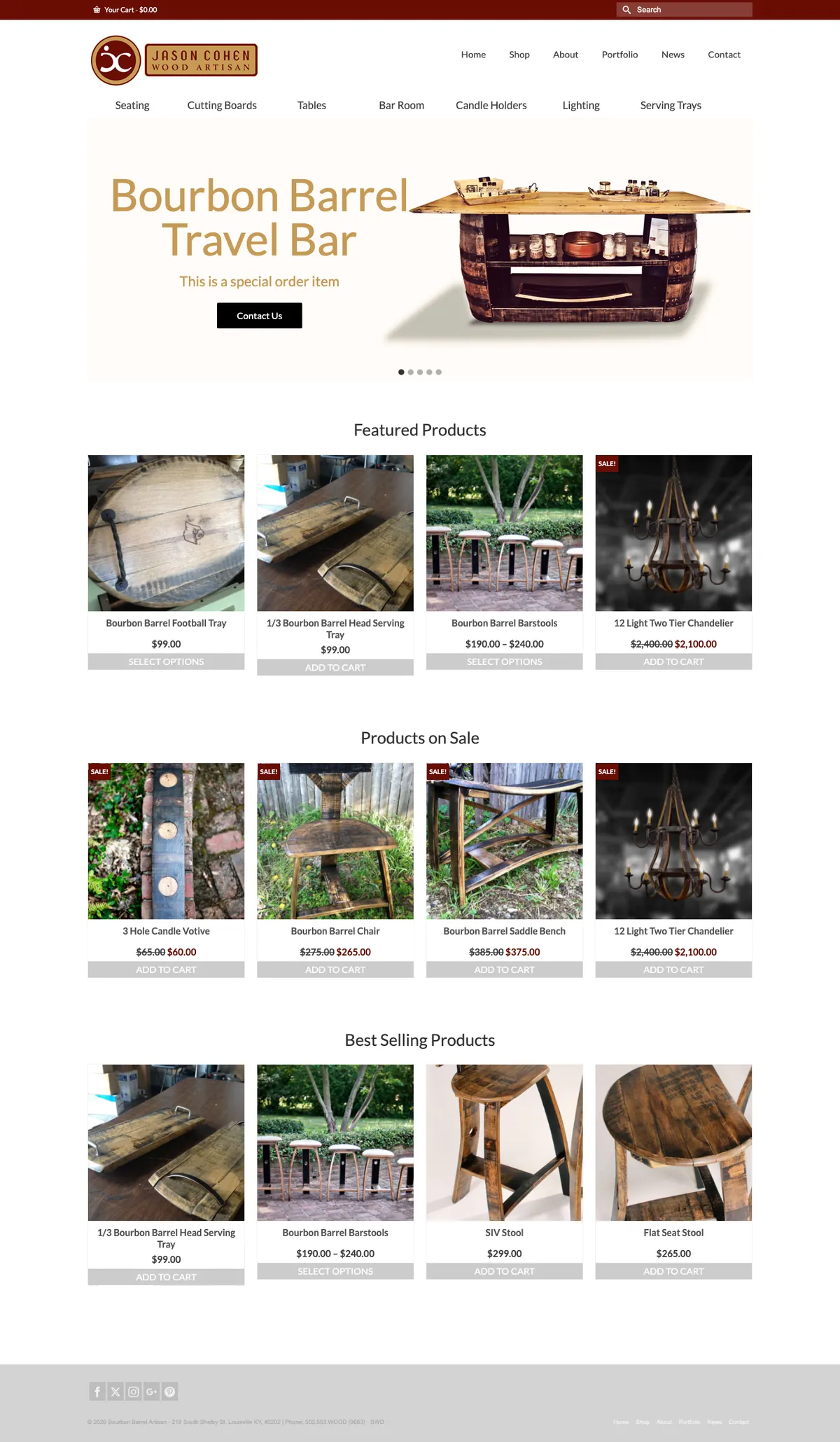
Websites I have built for Kentucky businesses


















The short answer
The best Kentucky distillery websites answer the visitor’s practical questions before they ask: which tours exist, how long they take, what they cost, when new dates open, how to get there, what is accessible and what bottles are actually on the shelf today. They book tours without friction on a phone, are honest about where bottles can legally ship, and tell their story through real people and real places.
Below are ten distillery sites that each do something worth copying, plus Kentucky Peerless, a site I have run since 2014, where I handled creative marketing, labeled as mine.
What separates the best Kentucky distillery websites
Bourbon tourism is a planned trip. The Kentucky Distillers’ Association, founded in 1880, started the Kentucky Bourbon Trail in 1999, and as of July 2023 counted 18 larger distilleries on the main trail and 28 on its Craft Tour. Visitors compare those stops on their phones weeks ahead, then again in the car. The sites below stand out because they serve that visitor:
- A tour list a person can compare: name, length, price, how often it runs and who it suits.
- Booking that works with one thumb, whether it runs on the distillery’s own site or a booking service.
- Honest bottle information: what is available in the gift shop today, what has limits, and where the online shop can and cannot ship.
- Practical visit planning: directions, parking, accessibility, food, children, pets and closures.
- A story with names in it: the master distiller, the family, the place.
None of these sites is perfect at all five. Each is excellent at one or two, so they are grouped by place, not ranked. I checked each against these five points in October 2026; follow the links to see them as they are today.
One disclosure before the list: I handled creative marketing for Kentucky Peerless Distilling Co.. Peerless is not one of the ten picks. It has its own section near the end, labeled as mine, so you can judge it by the same five points knowing that.
Woodford Reserve, Versailles: the planning page every distillery should copy
Woodford Reserve lists its experiences with the duration and price of each, from a standard tour to small premium tastings, and books them online. The planning page is the part to study. It explains the seasonal schedule, open seven days a week for most of the year and fewer days in January and February, and lists the specific closed dates.
Its accessibility note is the most specific I found on any distillery site: the tour path is wheelchair accessible, there are 32 steps up to the fermentation floor, an ADA elevator is available, and premium experiences on the warehouse’s second floor require stairs. It also names the handful of states its online shop can ship spirits to, and introduces its master distiller on a page of her own.
Copy this: say exactly how accessible the visit is, step counts included, and say exactly where you can ship.
Buffalo Trace, Frankfort: telling people what is on the shelf today
Buffalo Trace has a product availability page with a time stamp from that morning. It lists the bottles offered every day, the rotating bottles that are limited to one per person per day and subject to availability, and notes that limits vary with supply. For a distillery whose most sought-after bottles drive a lot of trips, that page answers the question every visitor has before getting in the car.
The visit pages are just as practical, covering when new tour dates are released, the parking lots, a downloadable parking map, how check-in works and where the café is.
Copy this: if visitors drive in hoping for a particular bottle, tell them, every morning, what is actually there.
Maker’s Mark, Loretto: local knowledge, said plainly
The Maker’s Mark Know Before You Go page reads like advice from a friend who lives nearby. It warns that one road in is not recommended for large vehicles and gives the two-lane alternative, explains that Uber and Lyft may drop you in Loretto but are not reliable for the ride back, and says the visitor center is card only, closed-toe shoes are required and photos are fine but filming the whole tour is not. Restaurant and bar hours sit on the same page.
The age gate also offers a login for members of its Ambassador program, so the brand’s most loyal fans are recognized at the door.
Copy this: write down the things your front desk tells people every day, and put them on one page before they arrive.
Castle & Key, Frankfort: a map of the grounds and a place to stay
Castle & Key’s visit page turns a historic property into something to explore: an interactive map with 15 numbered stops, from the castle itself to the warehouses, plus a quarter-mile botanical trail and the sunken garden. A lodging and transportation section points visitors to places to stay nearby and to car services for bourbon tours, because nobody should drive between tastings.
The age gate asks for the visitor’s state, and the online shop filters what it can sell by delivery state, which keeps the compliance question out of the shopper’s way.
Copy this: if the property is part of the experience, map it. And help people plan the night, not only the tour.
Downtown Louisville: Angel’s Envy, Old Forester and Michter’s
Angel’s Envy
On the Angel’s Envy tours page, each experience appears as a card with its type, length, how often it runs and its price, from the signature tour to a bottle-your-own single barrel experience, and a separate page lets guests manage the bookings they already have. The online shop offers engraving on select bottles and distillery pickup.
Old Forester
Old Forester’s location page lists every closure date for the year, so nobody plans a trip around a closed day. Cocktail classes are sold alongside tours, which turns the distillery into a place to come back to.
Michter’s Fort Nelson
On Michter’s Fort Nelson page, directions are given by landmark: the distillery sits across from the Louisville Slugger Museum. The visit page states its walk-in policy plainly and recommends booking online, and its merchandise shop gives a share of online sales to charity.
Copy this: make each tour a comparable card, publish your closures, and describe where you are the way a local would.
Bardstown, Lawrenceburg and Heaven Hill: three more ideas
Bardstown Bourbon Company, Bardstown
On the Bardstown Bourbon Company tour page, tour cards are tagged by who they suit, from newcomers to VIP visits, and the age policy is impossible to miss: every tour is 21 and over. A 360-degree virtual tour lets people look around before they book, and the restaurant takes reservations online.
Heaven Hill, Bardstown and Louisville
Heaven Hill offers a 3D virtual tour of its Bernheim distillery and ties newsletter sign-ups to perks at the visitor center, which gives a first-time visitor a reason to join the list.
Four Roses, Lawrenceburg and Cox’s Creek
The Four Roses site covers two visitor locations, the distillery in Lawrenceburg and the warehouse and bottling facility in Cox’s Creek, each with its own address, phone and hours. Its visit FAQ answers whether tours are ADA accessible and what is offered for guests with hearing loss.
Copy this: say who each tour is for, let people look around online, and give every location its own complete set of details.
Kentucky Peerless, Louisville: a site I run
I handled creative marketing for Kentucky Peerless Distilling Co., so this one is labeled for what it is: a site I run from the inside, and it should be judged by the same standards as the rest.
- Every tour and tasting is bookable on the brand site, each as a guided two-step booking with galleries and a live summary of what has been chosen.
- The register and the website agree. A custom plugin pulls quantities from the Clover register into the store every hour, so the site does not sell a bottle the shop no longer has.
- The front desk runs on the same system. A tablet check-in board shows the day’s tours and guests, and staff can enter walk-ins and phone reservations as real bookings.
- Bottles ship only where they legally can. On Shop Peerless, distillery pickup, direct shipping gated by state and partner shipping through a licensed retailer are kept as separate paths.
- The photography is mine, from bottles to the still house, shot in-house for a decade.
Read running a distillery brand’s digital front door and the Peerless guest check-in system.
What a distillery website needs, in order
If you run a distillery, or are about to open one, this is the order I would build in:
- An age gate that is quick and remembers the visitor, with the state captured if you sell online. See age verification for spirits ecommerce.
- A tour page of comparable cards: name, length, price, frequency, ages and who it suits.
- Booking that works on a phone, with a way to change or manage a booking. See online booking systems.
- A plan-your-visit page with directions, parking, accessibility in specifics, food, children, pets and every closure date.
- Honest bottle information: what is on the gift shop shelf, what has limits, and exactly where online orders can ship. See selling Kentucky bourbon online.
- A story with names, the people who make the whiskey, and photographs of the real place.
- Front-desk tools that match the website, so the check-in desk and the booking engine agree. See the guest check-in system.
That is the work behind distillery website design, and it is the same work I do for Kentucky Peerless.
Frequently asked questions
What should a distillery website include?
A quick age gate, a tour page with lengths, prices and ages, phone-friendly booking, a plan-your-visit page with directions, parking, accessibility and closures, honest information about which bottles are available and where online orders can ship, and the story of the people and the place.
Should a distillery use its own booking system or a booking service?
Either can work. The Kentucky distilleries on this page use a mix of booking services and booking built into their own sites. What matters is that booking is fast on a phone, matches what the front desk sees, and lets guests manage what they booked.
Can a Kentucky distillery ship bourbon from its website?
Only where the law allows, and the rules differ by state. Sites that do it well state exactly which states they ship to, and keep pickup, direct shipping and partner shipping as separate, clearly labeled paths.
Do distillery websites need an age gate?
Every alcohol brand site should ask, and stores selling spirits need real age verification at checkout. The best age gates are quick, remember the visitor, and capture the state when it affects what can be sold.
Is Kentucky Peerless a client of yours?
Yes. I handled creative marketing for Kentucky Peerless Distilling Co. and run its website, store, bookings and photography. The other distilleries on this page are independent; I chose them because their websites do something well.
Kentucky Peerless on a desk, a detail page and a phone.
Current captures of the live Kentucky Peerless site, nothing redrawn. The same site carries the bottle lineup, the Whiskey menu and the booking flow that sells the distillery’s tours and tastings.
Behind the pages are the systems visitors never see: the hourly Clover sync, the staff booking override, and the check-in board the front desk runs on tour days.

Kentucky distilleries open to visitors, on one map.
Find the distilleries on this page and the rest of the state, then check each one’s own website for tours, hours and closures before you go.
Want your distillery’s site to plan the visit for your guests?
Tell me what you offer visitors, what you sell online and what your front desk answers every day. I will tell you what I would build first, from the person who runs a distillery site himself.