How to Choose a Louisville Web Designer
A checklist from the person on the other side of the table: the questions to ask, the answers to listen for, and the red flags that cost businesses their websites later.
Or call or text (502) 387-1142




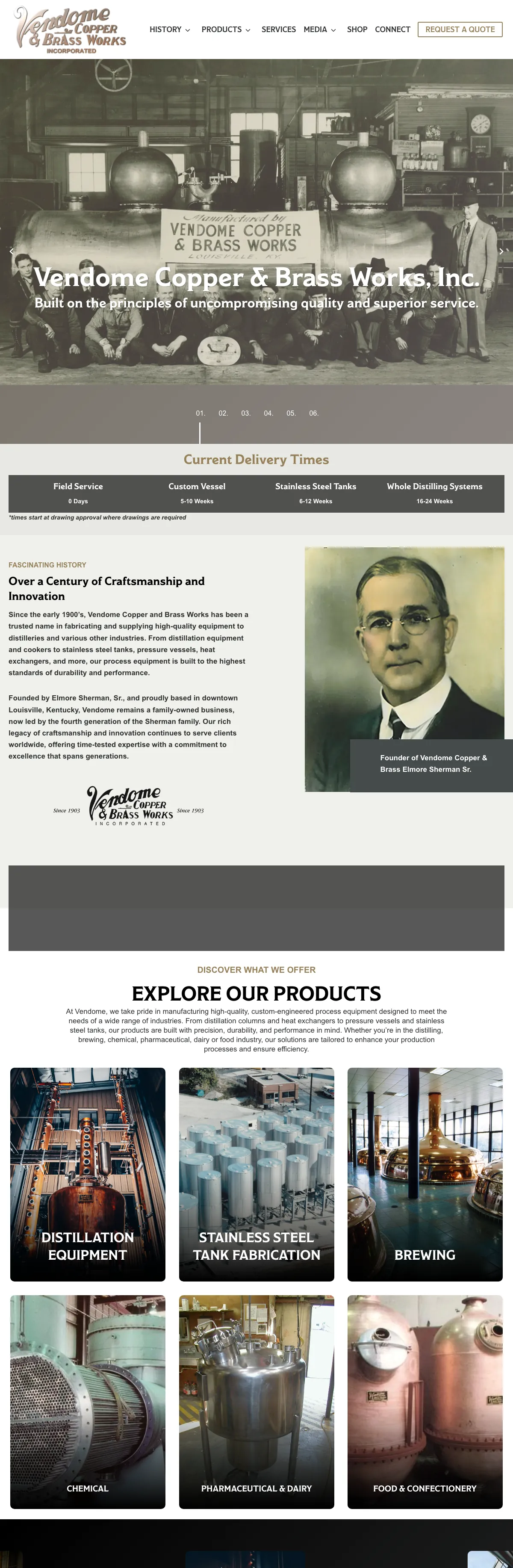
Websites I have built for Kentucky businesses


















The short answer
Choose the designer who can show you live sites like the one you need, tells you in writing what you are getting, keeps the domain and the accounts in your name, and can tell you exactly who answers the phone when something breaks after launch. Price and style matter too, but those four things decide whether you are still happy with the website two years from now.
I have built websites in Louisville since 2000, and a lot of my work is fixing sites other people built. Most of those problems trace back to a question nobody asked at the start. This is how to choose a web designer so you do not end up with one of them.
Start with what the website has to do
Before you talk to anyone, write down what the site is for. “Get more calls from people who need a water heater replaced” is a brief. “A new website” is not. You can only judge a designer against a goal, and a good one will ask about it before talking about colors.
- Who are your customers, and what do they need to know before they call?
- What should a visitor do: call, book, request a quote or buy?
- What has to connect to the site: bookings, payments, a CRM, inventory?
- Who will update the site after launch, and how often?
If a designer skips those questions and goes straight to a price or a template, that tells you how the rest of the project will go.
Questions to ask a web designer on the first call
The answers matter less than how clear they are. Vague answers now become arguments later.
- Who will actually design and build my site? Some studios sell the work and hand it to someone you never meet. That can be fine, but you should know.
- Can I see live sites you built, and talk to one of those owners?
- What exactly is included: pages, writing, photos, forms, search setup, testing and training?
- Who registers the domain, and in whose name?
- Where will the site be hosted, who pays for it, and how are backups handled?
- If you are replacing my current site, what happens to my Google rankings?
- How will I make changes myself?
- What happens after launch, and who looks after the site?
- If we stop working together, what do I walk away with?
I answer every one of those in a written scope before work starts, with hosting and ongoing care listed separately from the build. Whoever you hire, ask for the same.
How to judge a portfolio
- Open the live sites, not the screenshots. A mockup can look like anything. A live site has to load, on your phone, today.
- Check them on your phone. That is where most of your visitors will see your site too.
- Look for work like yours. Not necessarily the same industry, but the same kind of job: a service business that needs calls, a store with a real catalog, a booking system.
- Ask what the designer did on each one. Design only? Build, writing, photos, hosting?
- Check that the sites are still looked after. Forms that work, nothing broken, nothing years out of date.
- Read the case studies for the problem. A good one tells you what was wrong, what was built and what changed.
Every project in my project spotlights links to the live website for exactly that reason. Click through and try them.
Who owns the website, the domain and the accounts
This is the question people forget, and it causes the most damage later. At the end of the project you should hold:
- The domain, registered to your business in a registrar account you can log in to.
- An administrator login to the website in your own name.
- Owner access to Google Analytics, Search Console and your Google Business Profile.
- Your words and photos, and a clear answer on any licensed images or premium plugins.
I never take ownership of a client’s domain. It stays in their registrar account and points where they tell it. The full checklist is in who owns your WordPress website. Not sure where yours sits? Look up who controls your domain.
Who builds it, and who you will talk to
Ask who designs it, who writes the code, who writes the words and who you call when something is wrong. An agency may have a different person for each, which is fine as long as you know who they are. A freelancer may be one person, which is fine as long as that person does all of it well and will still be there next year.
At my studio it is me. The person you brief is the person who builds the site, hosts it and picks up the phone afterwards. That is one good model, not the only one. Whichever you choose, get names.
Hosting, updates and care after launch
A website is not finished at launch. WordPress, the theme and the plugins all need updates. Backups need to run somewhere other than the server, and someone needs to notice when a form stops sending. Ask:
- Who hosts it, and is hosting the same thing as maintenance? Often it is not.
- Where do the backups live, and has anyone ever restored one?
- Who applies updates, and are they tested first?
- How quickly will someone respond when the site is down?
My WordPress maintenance and care plans are scoped in writing before they start. Whoever you hire, make them write it down.
Contracts, timelines and the written scope
A good proposal reads like a plan. Look for:
- The pages and features, listed one by one.
- Who supplies the words and photos, and by when.
- How many rounds of changes are included.
- A timeline, with the steps that depend on you marked.
- What happens at launch: redirects, testing, Search Console.
- What you own when the project ends.
- What is not included, so nobody is surprised.
Timelines depend on content more than anything else. I cover that in how long it takes to build a small business website, and the cost side in what affects the cost of a website. For the contract itself, see what a web design contract should say.
Red flags when choosing a web designer
- The domain will be registered in the designer’s name or their company’s account.
- A promise of the top spot on Google. Nobody can promise a page-one position.
- No written scope, or a scope that fits on one line.
- A system only they can edit, or a site you could not take with you.
- No plan for your existing pages when replacing a site. See what happens to your Google rankings in a website redesign.
- They cannot tell you who will build it.
- They change the subject when you ask what happens after launch.
- Pressure to sign this week.
Does the designer need to be in Louisville?
No. A website does not care where it was built, and I work with businesses outside Kentucky too. But a designer in Louisville can sit across the table from you while the plan comes together, and is a short drive away when something needs to be looked at in person. If that matters to you, my Louisville web design company page shows the local work and how I run a project from first call to launch.
Frequently asked questions
How many web designers should I talk to?
Two or three is usually enough. Past that, the proposals start to blur together. Compare what each one includes, not just the total. For local context, see my Louisville web design prices study.
Should I hire a freelancer or an agency?
Either can be right. What matters is knowing who does the work, who you call after launch, and that they will still be around to answer. Ask both the same questions. My freelancer, agency or DIY builder comparison lays out what each costs over three years.
What should I have ready before the first call?
What the business does, who your customers are, what you want visitors to do, a few sites you like and why, and your current domain and hosting details if you have them.
Is it a bad sign if a designer will not quote on the first call?
Not necessarily. A fair quote depends on the scope. A designer who asks questions first and then sends a written scope is usually more accurate than one who quotes before knowing what you need.
Do you work with businesses outside Louisville?
Yes. Most of my clients are in Louisville, Southern Indiana and across Kentucky, and I work with businesses anywhere.
Ask me the hard questions.
I will answer every question on this list on a short call, and in writing before any work starts. Book a time or call me at (502) 387-1142.