AI receptionists for small business: what they do, what they cost, and when to skip one.
An AI receptionist answers your phone with a computer voice, takes messages, answers common questions and can book appointments. For some businesses it catches calls that used to go to voicemail. For others it loses the very calls they most wanted. Here is how to tell which one you are.
Or call or text (502) 387-1142




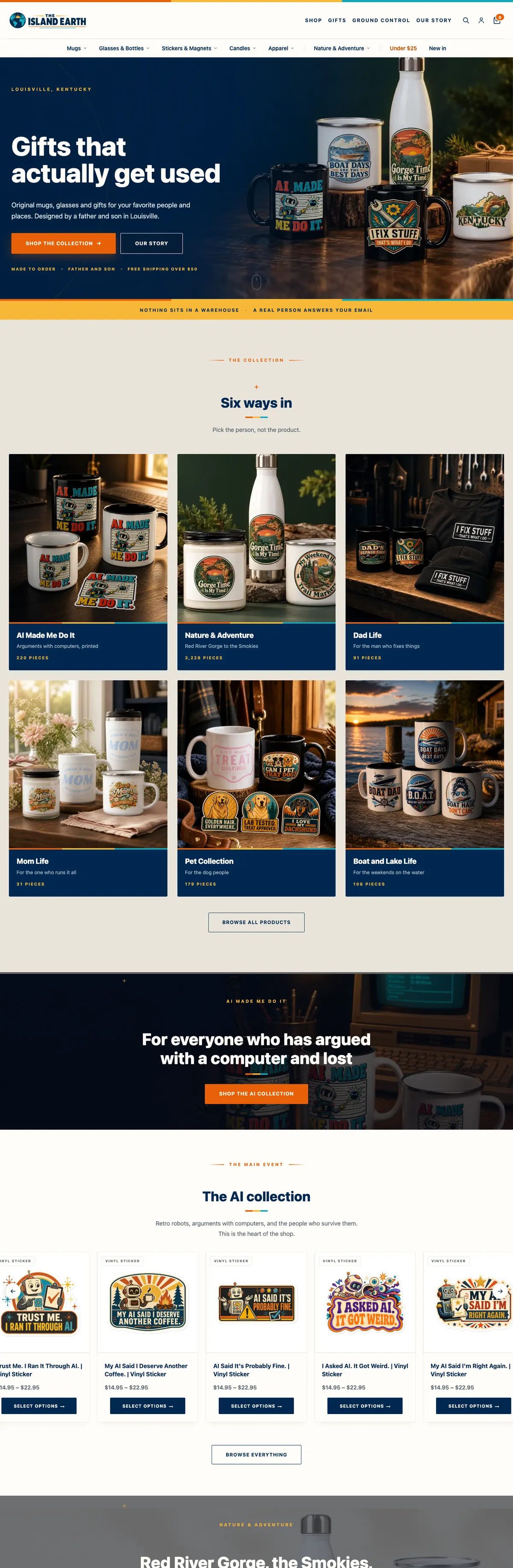
Websites I have built for Kentucky businesses


















The short answer
An AI receptionist is software that answers your business phone, talks with callers in a natural-sounding voice, and then takes a message, answers a set question, books a time or transfers the call.
It is worth it when you miss calls you could have won and most of those calls ask the same few things. It is a poor fit when callers are upset, the job needs judgment on the phone, or a wrong answer costs real money. Count your missed calls first, test it hard on your own phone, and always keep a fast path to a person.
What an AI receptionist actually does
An AI receptionist is a phone service that answers your business line with a computer-generated voice that sounds close to a person. Behind the voice is a language model, the same kind of software behind ChatGPT, working from the facts and rules you give it.
On a typical call it can:
- answer when you cannot: after hours, on weekends, or when every line is busy
- answer the questions you load into it, such as hours, service area, what you do and do not do, and how to get a quote
- take a message and send you a written summary by text or email, often with a recording and a transcript
- book, move or cancel an appointment, if it is connected to your calendar
- transfer the call to a person when the caller asks or when a rule says to
- text the caller a link, such as your booking page or a quote form
That puts it between two older tools. A phone tree (press 1 for service) only routes calls. A human answering service puts people on the line. An AI receptionist talks like a person and follows rules like software.
Where an AI receptionist does well
It earns its keep in a few specific situations:
- Missed calls you could have won. If calls go to voicemail while you are on a roof, with a patient or driving, and those callers simply ring the next business, catching them is worth real money.
- The same few questions all day. Hours, whether you serve a town, whether you are open Saturday, the prices you already publish. Software answers these the same way every time.
- Simple, fixed-length bookings. A half-hour consultation or a standard service call fits neatly into a calendar.
- After-hours capture. A caller at nine at night gets an answer and a booked call-back instead of a voicemail box.
- Clean notes. You get the name, number and reason for the call in writing, instead of a garbled voicemail.
Where it does badly
The weak spots tend to be the calls that matter most:
- Upset or frightened callers. A burst pipe, a missed delivery or a billing dispute needs a person who can calm someone down and make a decision on the spot.
- Names, numbers and addresses. Speech recognition can mishear a street name, a spelling or one digit of a phone number, especially from a car or a noisy job site. One wrong digit is a lost lead.
- Questions nobody planned for. A language model can produce a fluent, confident answer that is simply wrong. If it is not tightly limited to your facts, it may invent a price, a policy or an opening time.
- Anything that needs judgment. Whether a job is worth taking, how urgent it is, whether to squeeze someone in. That is your business, and it should stay with you.
- Complicated scheduling. Crew availability, drive time between jobs and parts on order rarely live in a calendar the software can read.
- Callers who hang up on robots. Some people will. Once it is live, watch how many calls end in the first few seconds.
What an AI receptionist costs
The pricing differs more in structure than in headline numbers, so compare the model before the price. These are the models on vendors’ own pricing pages, checked in October 2026. They change often, and they are separate from anything I charge to set a service up, which comes from a written scope:
- A monthly plan with an allowance of calls, plus a set charge for each call over the allowance. Ask how spam and wrong numbers are counted; at least one service, Smith.ai, lets you strike a share of spam calls from the bill.
- A monthly plan counted by unique callers, where one caller counts once a month however often they call, as on Goodcall’s pricing page.
- Pay as you go by the minute, often built from separate charges for the voice, the language model and the phone line. Ask whether hold time and silence are billed, because on some services, such as Retell AI, the whole call is.
- Human answering services, for comparison, usually sell a monthly bundle of receptionist minutes, as Ruby’s plans do.
The subscription is rarely the whole cost. Budget time to write the answers it gives, connect it to your calendar, and read its transcripts every week for the first month. Then do the arithmetic with your own numbers: a month of the service against the jobs that currently go to voicemail. If you cannot name a job you lost to a missed call last month, count your missed calls for a few weeks before you buy anything.
Privacy, recording and the rules to check
An AI receptionist records and stores conversations with your customers, so treat the vendor like any other company you hand customer information to. Ask them:
- where recordings and transcripts are stored, for how long, and how you delete them
- whether your calls are used to train their models, and how to switch that off
- who on their side can listen to calls
- whether you can export everything if you leave
Then check the rules that apply to you:
- Call recording. Under KRS 526.010, Kentucky allows a conversation to be recorded with the consent of one party to it. Some states require everyone on the call to agree, California among them under Penal Code 632, and you cannot always tell where a caller is. A short line at the start, such as “this call is recorded so your message reaches the right person,” is the simple habit.
- Health information. A medical or dental practice must have a vendor’s written assurance, a business associate agreement under HIPAA’s disclosure rules, before that vendor handles patient information.
- Calling people back. The FCC ruled in February 2024 that AI-generated voices count as artificial voices under the Telephone Consumer Protection Act, so automated calls made with one need the person’s prior express consent. Answering a call someone made to you is a different situation from dialing out.
- Card numbers. Do not let it take payment details over the phone. Have it text a secure payment link instead.
This is not legal advice. If recording or patient information applies to you, ask your attorney before you switch anything on.
How to test an AI receptionist before customers hear it
Every vendor demo sounds good. Your own calls will tell you more. Before it answers a real customer, make these calls yourself, then have a friend make them too:
- Call from your truck or a noisy room and give a long street name and a phone number. Check the summary digit by digit.
- Ask a question it was never given. It should say it does not know and offer a call-back. If it guesses, it is not ready.
- Ask what a job will cost. It should give only the prices you approved, or none at all.
- Play an angry customer, then an emergency. It should hand over to a person quickly.
- Ask, “Am I talking to a real person?” It should answer honestly.
- Try to book a time that is already taken, and one outside your hours.
- Hang up halfway through. Check whether you still get the caller’s number.
- Ask for the owner. Time the transfer, and find out what happens when nobody picks up.
For the first two weeks, read every transcript. Fix the answers it got wrong, tighten the rules, and write down the topics it must always pass to a person.
When a call-back, a form or a person is the better answer
Sometimes the right answer is not AI at all:
- You miss few calls. Forward overflow to your cell, turn on voicemail transcription and promise a call-back within the hour. That costs almost nothing.
- Your calls are high value or emotional. A law office, a contractor quoting a large job or a medical practice is often better served by a person on the desk or a trained human answering service.
- Most callers just want to book. A clear booking page lets them pick a time without calling at all. Kentucky Peerless Distilling sells its tours that way, through an online booking system on its own website.
- Some people would rather not call. A short request form that asks the right questions, like the ones in my service business request forms guide, catches the after-hours lead in writing.
- Your website loses the call before it starts. If your number is buried in the footer or does not dial when tapped on a phone, fix that first. My free website call check finds those problems in a few seconds.
How I approach phone automation for clients
Most of my own new projects start with a phone call, so I take a missed call seriously. When an owner asks me about an AI receptionist, I start with the calls themselves: how many come in, when, what they ask and how many go unanswered. Often a booking page, a better form or a text back to a missed caller fixes most of the problem.
When an AI receptionist does make sense, it follows the same rules as every AI automation I build in Louisville and beyond. It answers only from your facts. Anything that commits your business waits for you. It runs in your accounts where possible, it is written down in plain English, and it can be switched off without breaking anything else. If you are weighing several AI tools at once, a conversation with an AI consultant is the better first step.
Frequently asked questions
How much does an AI receptionist cost a small business?
It depends more on the pricing model than the headline price. Services charge by the call, by the unique caller, or by the minute with separate charges for the voice, the language model and the phone line. Add your own setup time and a weekly review of transcripts, then compare the total with the value of the calls you miss today.
Will callers know they are talking to an AI?
Many will, and some will hang up. Set it to say it is an automated assistant when asked, and never to claim to be a person. Being caught pretending does more damage than being upfront.
Can an AI receptionist book appointments into my calendar?
Yes, when it is connected to a calendar it can read and write. Keep the booking rules simple, test double bookings and out-of-hours requests yourself, and make sure every booking also reaches you as a notification.
Is it legal to record business calls in Kentucky?
Kentucky law allows a conversation to be recorded with the consent of one party to it. Callers in other states may be covered by stricter all-party consent laws, such as California’s, so a short recording notice at the start of each call is the safe habit. Ask your attorney about your own situation.
Is an AI receptionist better than a human answering service?
It can answer several calls at once and never puts anyone on hold, but it is weaker with upset callers, unusual requests and judgment calls. Many businesses do best with software for after-hours and simple questions, and a person for everything else.
Can an AI receptionist replace my front desk?
For most small businesses, no. It works best as overflow and after-hours cover, so the person on the desk can spend their time on the customers in front of them.
Want a straight answer about your phones?
Tell me how calls come in today and what happens when you miss one. I will tell you whether an AI receptionist, a simpler fix or nothing at all makes sense, from the person who would set it up.