
Custom auction and marketplace website development, built around how your buyers actually buy.
A custom auction site or multi-vendor marketplace is a business system with a storefront on top: approved sellers, one honest record per item, money that splits the right way and messages that keep people on your platform. I built HogMatch, a live show-pig marketplace taking deposits, and I build the same foundation for yours.
Or call or text (502) 387-1142
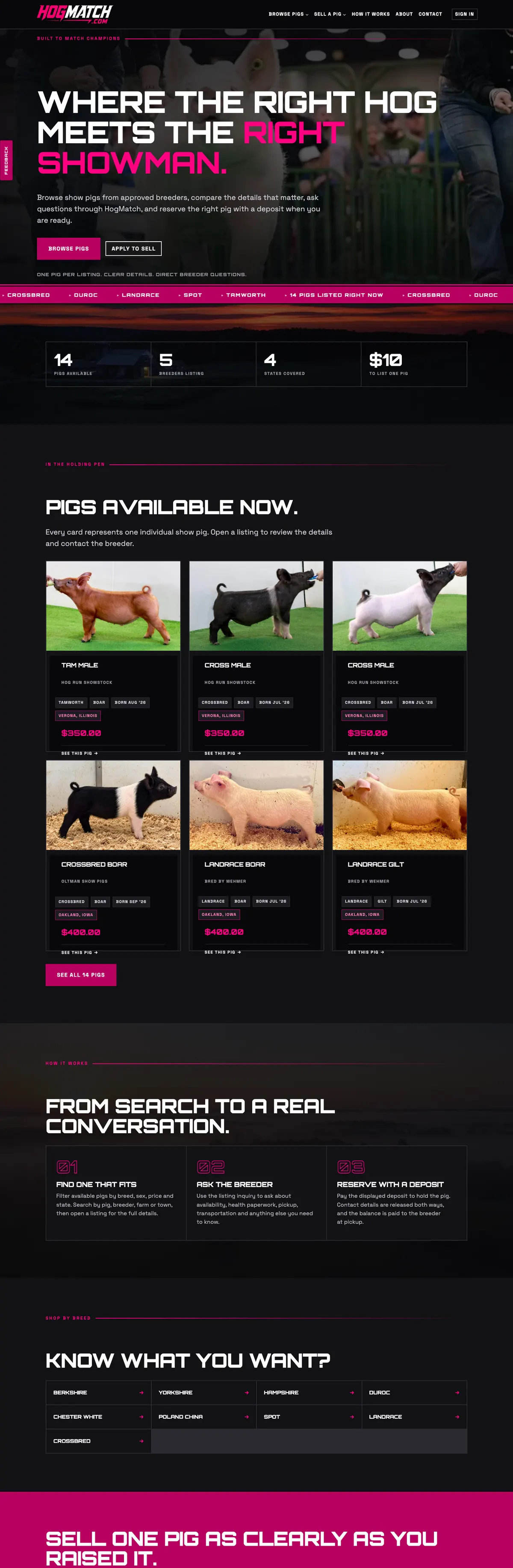

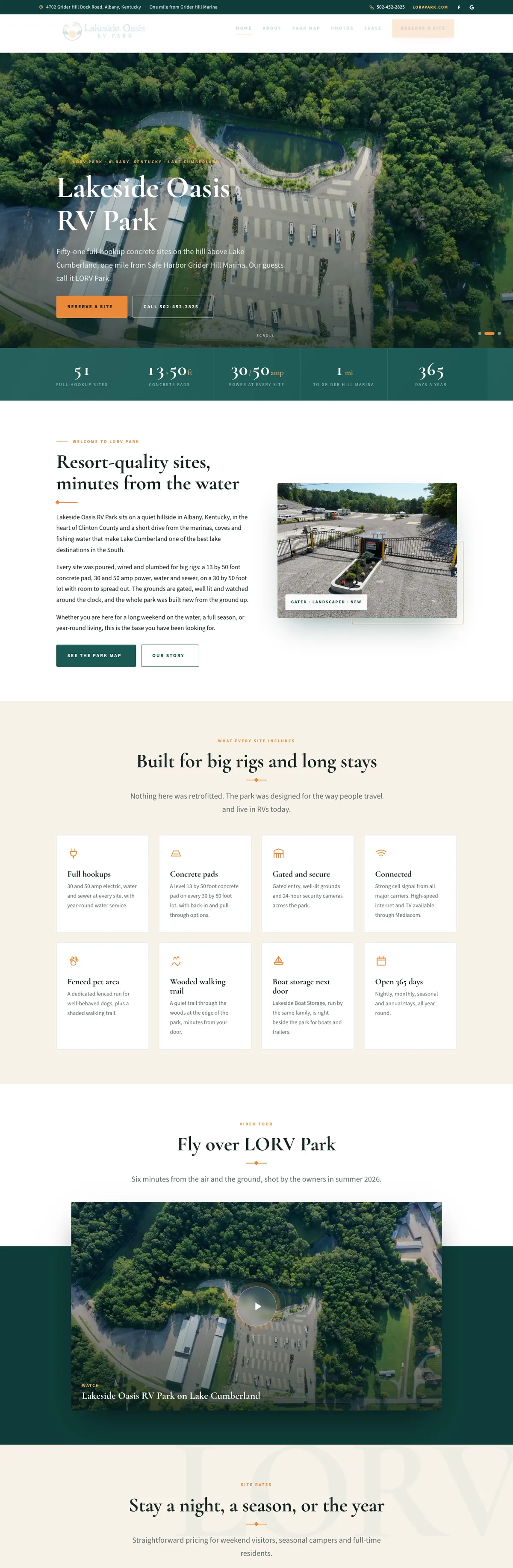


Websites I have built for Kentucky businesses


















Most marketplace sites fail in the data, not the design.
A marketplace idea usually starts with real industry knowledge and a stack of plugins. Then the plugins start fighting each other. When HogMatch came to me, the prototype ran 45 active plugins, carried two competing listing models, and showed buyers an empty catalog even though demo listings existed behind the scenes.
No amount of styling fixes that. The interface only gets clear once the data model is clear: what one item is, who is allowed to sell it, what states it moves through, and where the money goes. That is where I start, whether you need a multi-vendor listing marketplace or a custom auction website, built as a custom WordPress plugin on a WooCommerce foundation.
Auction, listings or offers? Pick what your buyers trust.
The selling format shapes every screen, every email and every rule about money. Getting it right saves rebuilding later.
Bidding with a clock
Best when items are scarce and buyers compete. It needs written rules before code: starting bid, reserve, bid increments, what happens when a bid lands in the final minutes, any buyer’s premium, and how the winner pays after the close.
A price, a deposit, a pickup
The HogMatch model. Each animal has an asking price; a buyer pays a deposit to reserve it, the item is held off the market while the deposit is in progress, and the balance is settled at pickup.
Questions, then an offer
Right for high-value or custom items where buyers need to talk before they commit. The platform carries the conversation, so neither side has a reason to take the deal somewhere else.
What marketplace website development covers.
Approval-first seller tools
Sellers apply, you approve, and only approved sellers get listing tools. They post, edit, change a price, withdraw and relist without ever reaching the settings that run the platform.
One record per item
Every listing is a single source of truth with real marketplace states: live, reserved, sold, withdrawn and expired. The catalog card, the detail page, the emails and the admin screens all read from that one record.
Search that behaves like a marketplace
Search by item, seller or location, filters whose counts respond to each other, and sorting written for your product instead of a generic store’s defaults.
One function for the money
Deposit, platform commission, the amount owed to the seller and the balance due are worked out in one place, so the listing page, every email and the dashboard can never disagree.
A relay that keeps deals on the platform
Buyer questions reach sellers under a handle with contact details masked, and replies flow back through your site. Details are released when your rule says so, such as when a deposit is paid.
Photos and video from a phone
Sellers upload from wherever they are. The server converts phone video into a standard web format that current browsers play, and listing pages stay fast because images are sized for the job.
HogMatch: one pig, one listing, real deposits.
HogMatch is a show-pig marketplace that lets smaller breeders list one or a few animals without forcing every sale into an auction. I cut the seller application from 45 fields to 25, built one canonical record per pig, a masked buyer and seller relay, fourteen branded emails sent through an authenticated mail service, and a video pipeline that turns barn footage shot on a phone into web video.
Deposits are taken through PayPal at checkout. A demo mode with a simulated gateway let the client walk the whole flow before launch without moving a dollar, and a 33-check acceptance suite runs after every change.

Rules first, screens second.
Model the item and the money
It starts on paper: what one item is, its states, who can sell, how payment, commission and payout work, and what happens when a deal falls through.
Build on a private copy
The platform comes together on a staging site with a simulated gateway, so you can buy, sell and cancel without real money moving.
Prove it with checks
An acceptance list covers every rule: who sees what, which emails fire, what the money function returns. It runs again after every change.
Launch and run it
Hosting, monitoring, backups and updates come from the person who wrote the code, on managed WordPress hosting, so a marketplace problem gets fixed by someone who knows the rules.
What to know before you build a marketplace.
A plugin may be enough
Multivendor plugins such as Dokan give you vendor dashboards and commissions in their free version, with auctions and split payments in paid modules. If your rules are standard, I will tell you to start there.
Paying sellers takes approval
Services that split a payment and pay sellers directly take time to set up. Stripe Connect collects verification information for each seller, and PayPal’s platform program approves the platform before it can go live. Plan for that time.
The site cannot create sellers
A marketplace needs sellers and buyers on day one. I build the platform and the tools; filling it is a business job that has to start before launch, not after.
Marketplace and auction websites, answered.
How much does a custom auction or marketplace website cost?
It depends on the format and the rules. A listing marketplace with deposits is a different build from timed bidding with a reserve and a buyer’s premium. I quote from a short written scope after one conversation, so the number matches the rules your marketplace actually runs on.
Can WordPress really run a marketplace?
Yes. HogMatch runs on WordPress and WooCommerce with a custom plugin for the marketplace rules. WordPress handles accounts, content and the store; the custom code handles what makes your marketplace different.
Should my marketplace take payment or just connect people?
If you never touch the money, people learn to leave your site to finish the deal. HogMatch takes a deposit at checkout and keeps contact details masked until it is paid, which gives both sides a reason to stay.
How do sellers get paid?
Either the platform collects the payment and pays sellers itself, or a split-payment service sends each seller their share. The second is cleaner at scale but needs seller verification and, with PayPal, approval of your platform first.
Do you build livestock and agriculture marketplaces?
Yes. HogMatch is a livestock marketplace built for breeders who list from the barn on a phone. I am in Louisville, Kentucky and build for farm and livestock businesses here and anywhere in the United States.
Can buyers bid against each other in real time?
Yes, with a custom bidding plugin. The hard part is the rules, not the button: increments, reserve, what a late bid does to the clock, and how the winner pays. I write those down with you before any code.
Tell me what changes hands on your marketplace.
Describe the item, the sellers and how the money should move. I will tell you which format fits, whether a plugin covers it, and what a custom build would involve.
Connect with me
Tell me about your marketplace.
What happens next
- 01I reply, usually the same day. Every message comes straight to me, not a ticket queue.
- 02A short call. What the site needs to do, who it is for, and what has not worked before.
- 03A written scope and flat quote. Before any work starts, with hosting and ongoing care listed separately.
5.0 on Google · 23 reviews · I usually reply the same day