
Nonprofit website design that raises money, signs up volunteers and holds up when a funder looks.
Your website is where a donor decides to give, a volunteer decides to show up and a program officer checks that you are real. Nonprofit website design, the way I do it, means each of those paths works on a phone, works for every visitor, and is looked after by the person who built it.
Or call or text (502) 387-1142
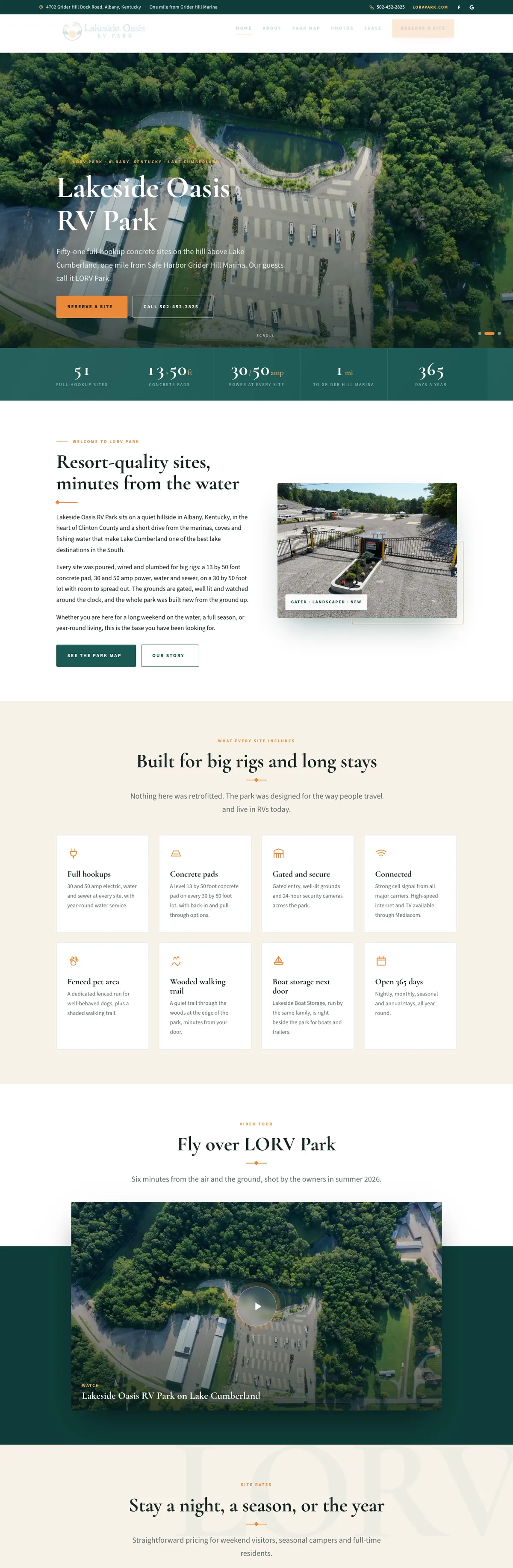



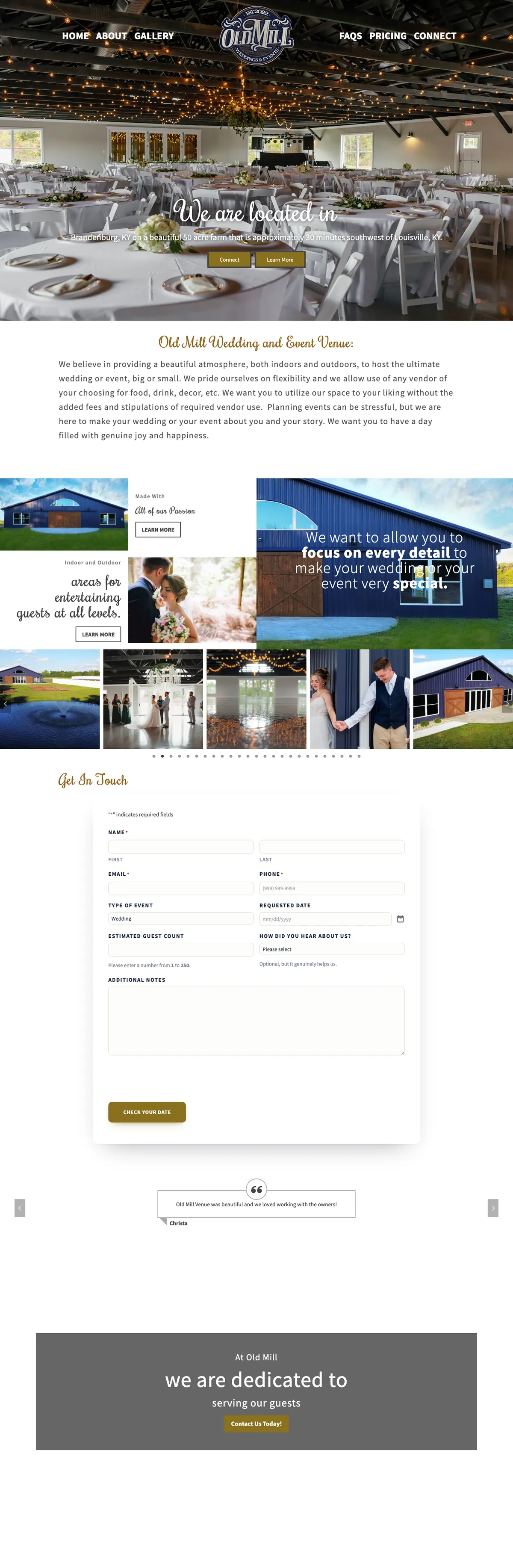
Websites I have built for Kentucky businesses


















I have no nonprofit project published here yet. Here is what I bring.
I would rather say that plainly than dress up a business project as charity work. What I have built many times over are the pieces a nonprofit site runs on: forms that ask the right questions and reliably reach the inbox, online payments and event bookings, sign-up kiosks that never lose a name, accessible pages, and hosting that somebody actually watches.
The rest of this page explains what a nonprofit website needs, in the order it matters, whether you hire me or not.
Nonprofit website design comes down to six jobs.
Say what you do in one screen
Who you serve, where, and what changes because you exist, in plain words at the top of the home page. Donors, volunteers and funders all start there.
Donations that take a minute
A donation page on your own domain, one-time and monthly gifts, suggested amounts tied to what they pay for, and a receipt email sent automatically.
Volunteer sign-ups that route themselves
A form that asks availability and interests, shows the background-check questions only for roles that need them, and sends each sign-up to the right coordinator.
Galas, runs and workshops
Registration, ticket types and capacity limits on your own site, plus a check-in list at the door if you want one.
Pages a funder can check
Programs, outcomes, leadership, your annual report and financials where a program officer can find them, so the website backs up the grant application.
Usable by every visitor
Built and tested toward WCAG 2.2 Level AA: keyboard use, screen readers, color contrast, captions, and form fields with real labels.
The details that trip up nonprofit websites
Donation receipts the IRS will accept
The IRS says a donor needs a written acknowledgment to deduct any single gift of 250 dollars or more. It has to name your organization and the amount, and say whether the donor received goods or services in return. An email counts, according to IRS Publication 1771, so the donation form can send that receipt automatically with the right wording.
If a gala ticket or an auction item is partly a gift and partly something the donor gets back, any payment over 75 dollars needs a written disclosure of the value of what they received. The ticket page and its receipt should handle that, so a volunteer at the door does not have to.
Processing fees on gifts
Every card gift pays a processing fee. PayPal’s confirmed charity rate for US transactions is 1.99 percent plus 49 cents, once PayPal approves the organization. A donation form on your own site, connected straight to the processor, puts no extra platform between the donor and your bank account, and the donor list stays in your hands.
Google Ad Grants
Google Ad Grants gives eligible nonprofits up to 10,000 US dollars a month in Google search text ads. In the US, Google’s eligibility rules mean 501(c)(3) status or a qualifying group exemption. Government bodies, hospitals and schools are not eligible, though the charitable foundations of hospitals and schools can be. Approval also depends on the website. Google’s website policy asks for a domain you own, HTTPS on every page, substantial original content about your mission and programs, working links and donation buttons, fast mobile pages, and your address, EIN or annual report on the site. Those are website problems, and they are the part I can fix.
Email that reaches the inbox
Since February 2024, Google’s Gmail sender guidelines have required anyone sending more than 5,000 messages a day to Gmail to authenticate with SPF, DKIM and DMARC and to offer one-click unsubscribe on marketing mail, and every sender needs at least SPF or DKIM. When donation receipts and volunteer confirmations land in spam, missing authentication is the first thing I check. More on that in fix website form emails.
Accessibility is part of the mission
The Department of Justice’s web accessibility guidance says the ADA’s rules for businesses open to the public cover what they offer on the web, and the ADA’s own list of public accommodations includes food banks, homeless shelters, senior centers, day care centers and adoption agencies. Ask your attorney what applies to you. The Justice Department points to WCAG as helpful guidance, and building to WCAG 2.2 Level AA is the practical way to be ready. It is how I build. My own accessibility statement shows how I test.
A sign-up kiosk that cannot lose a name.
At Kentucky Peerless, visitors sign a branded guest book on an iPad at the door. Every sign-up is saved to the website’s own ledger first, then synced to the mailing list with the consent wording recorded, automatic retries and a daily alert if the sync ever starts failing.
Swap the tasting room for a volunteer fair or a gala check-in table and it is the same tool. The same site sells tour seats with live capacity and a check-in board for the front desk, which is how registration for a fundraiser should work too.


Conditional forms, protected from spam without puzzles.
The reservation inquiry I built for Lakeside Oasis RV Park changes its questions with the answers: what a guest is asking about decides which questions follow, and a site number arrives already filled in from the park map. A volunteer or assistance request form works the same way, so people only see the questions that apply to them.
My forms use Cloudflare Turnstile instead of picture puzzles, and site mail goes through an authenticated relay with SPF, DKIM and DMARC set, so a sign-up reaches the coordinator’s inbox instead of a spam folder.
From first call to a site your staff can run.
Listen
Your programs, who you serve, how gifts and volunteers come in today, and what your board and funders keep asking for.
Map the paths
Give, volunteer, attend, get help: each one becomes a page and a form that asks what your staff actually needs to know.
Build and test
WordPress, tested with a keyboard, at 200 percent zoom and on phones, with every form and receipt email checked end to end.
Hand over, then look after it
Your staff edits news, events and stories. Hosting, backups, updates and monitoring every 60 seconds stay with me.
What you should know before hiring me.
Someone has to own it
A site only stays current if someone on staff posts the news and the events. I keep editing simple and show them how, but the job needs a name next to it.
When a simple setup is enough
A small group with one annual drive may be well served by a simple site and a hosted donation page. If that is you, I will say so.
What the site cannot do
It cannot write your grant or win it. It can make sure a funder who checks your website finds a real, current, well-run organization.
What nonprofit teams ask first.
Can a nonprofit website take donations directly?
Yes. One-time and monthly gifts can run on your own domain through a processor such as PayPal or Stripe, with an automatic receipt email worded for the IRS acknowledgment rules.
Will a new website help with Google Ad Grants?
The grant depends first on your eligibility as a charity. The website then has to meet Google’s policy: your own domain, HTTPS throughout, real content about your programs, working links and fast mobile pages. I build to that list from the start.
Can my staff update the site themselves?
Yes. News, events, program pages and stories are edited in WordPress, and I show your staff how. The technical care stays with me.
How do you handle accessibility?
I build and test toward WCAG 2.2 Level AA with automated checks and by hand, using a keyboard, 200 percent zoom and reduced motion. I can also audit a site you already have.
Do you work with nonprofits outside Louisville?
Yes. I work with organizations across Louisville, Southern Indiana and Kentucky, and remotely anywhere in the United States.
What does a nonprofit website cost?
It depends on what it has to do. A five-page site with a donation link is a different job from one with event registration and a volunteer system. I quote from a written scope after one conversation.
Tell me about your mission.
Send your current site and the one thing it should do better. I will look at it and tell you what I see, including whether it is ready for a Google Ad Grants application.
Connect with me
Tell me about your organization.
What happens next
- 01I reply, usually the same day. Every message comes straight to me, not a ticket queue.
- 02A short call. What the site needs to do, who it is for, and what has not worked before.
- 03A written scope and flat quote. Before any work starts, with hosting and ongoing care listed separately.
5.0 on Google · 23 reviews · I usually reply the same day