
Dental website design that fills the schedule and respects patient privacy.
Good dental website design, and chiropractic website design too, comes down to three things: a new patient who can book or ask for a time from a phone, reviews you earn and answer safely, and forms built to keep health details out of places they do not belong. I build practice websites with all three in mind.
Or call or text (502) 387-1142
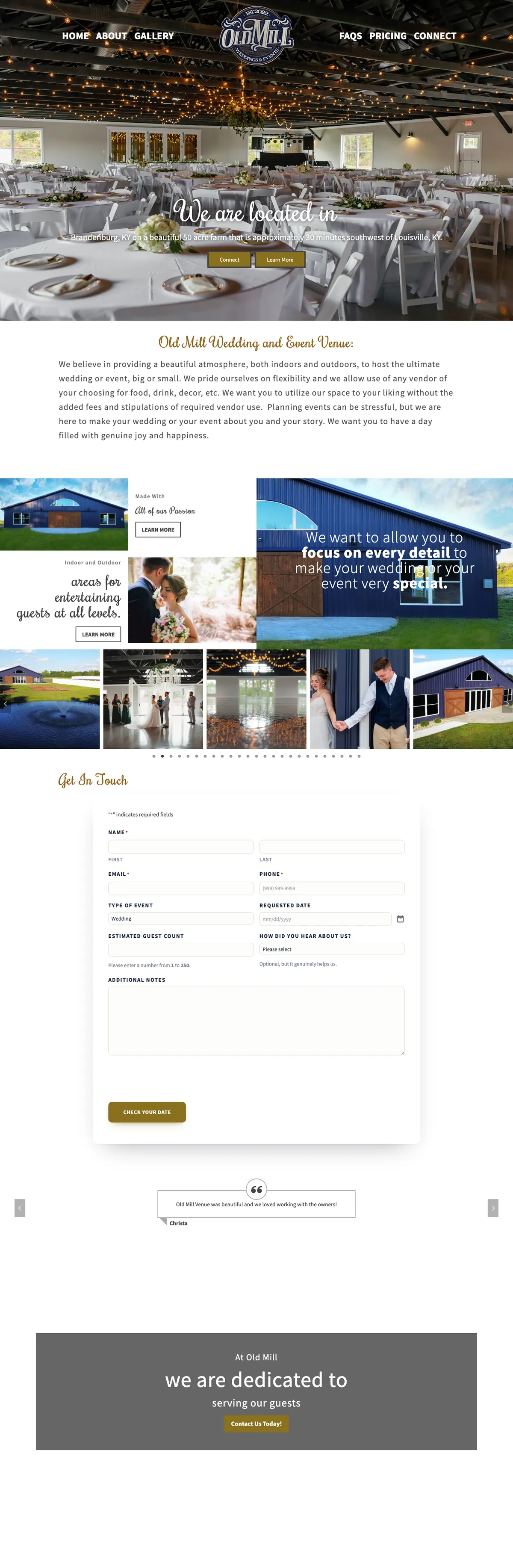



Websites I have built for Kentucky businesses


















A new patient decides in a few screens.
Before calling, a new patient checks whether you take their insurance, where you are and where to park, your hours, what the first visit involves and who the doctor is. A dental patient with a broken tooth wants to know if you see emergencies today. A chiropractic patient with a stiff back wants to know what an adjustment involves and whether their plan covers it.
When those answers are hard to find on a phone, the next practice in the map results is one tap away. The rest of this page is about getting those answers right, and doing it without creating a privacy problem.
Dental website design: what a practice site has to do.
Booking that matches your front desk
If your practice software offers online scheduling, the site links to it or embeds it. If not, a request-a-time form asks for a call back. A slot offered online is a promise, so the site only offers times someone is watching.
Forms that ask for less
The website form collects what scheduling needs: name, phone, preferred time, new or returning, insurance carrier. It asks people in plain words not to send symptoms or history, and clinical intake stays in your patient portal.
No ad pixels on booking pages
HHS’s tracking guidance says a tracking vendor that receives appointment details from a covered practice’s website is a business associate that needs a signed agreement. Ad and analytics tags stay off booking and form pages unless the vendor signs one.
Reviews earned and answered safely
A direct review link and QR code for the front desk, offered to every patient alike, because Google’s review policy prohibits review incentives and asking only happy customers. Replies never confirm that someone is a patient, a lesson from HHS’s settlement with a Dallas dental practice over patient details disclosed on social media.
Accessible from the first draft
Built toward WCAG 2.1 AA: readable contrast, keyboard navigation, labeled form fields, captions and alt text. For many practices this is now a federal requirement with a date attached, explained below.
Pages for the visits you want more of
Implants, aligners, emergencies and children’s visits, or first visits, adjustments and auto injury care. Each page explains what happens, what affects the cost and how insurance usually works, in words a patient uses.
HIPAA, accessibility and your website, in plain words.
Who HIPAA covers
HHS lists dentists and chiropractors among the providers HIPAA covers, but only if they send health information electronically for a standard transaction, such as an insurance claim. So a practice that files insurance claims electronically is covered, and a cash-only practice should ask its compliance adviser where it stands.
What that means for a web form
No checkbox makes a website HIPAA compliant. What matters is what a form collects and where it goes. If a form gathers health information, every service that stores or handles it is handling protected health information: the form plugin’s database, the email that carries the notification, the hosting. HHS’s cloud computing guidance says a cloud service that stores it is a business associate even when the data is encrypted. The simple answer is to keep the public form to scheduling details and send clinical questions through your practice software’s patient portal, under the business associate agreement you already have.
Tracking, and the 2024 court ruling
HHS’s tracking bulletin says that when a patient books through a covered clinic’s website and third-party tracking is on the page, the tracking vendor is a business associate and an agreement is required. In June 2024 a federal court, in American Hospital Association v. Becerra, vacated the part of that bulletin that treated an IP address plus a visit to a public, no-login page about a health condition or a provider as protected information. General marketing pages, such as services, the team, directions and the blog, are treated differently as a result. The workflows that can carry patient information, meaning booking, forms, the patient portal and replies to reviews, are where the HIPAA care still belongs.
The Section 504 accessibility rule
HHS’s 2024 Section 504 rule requires recipients of HHS financial assistance to make their websites and apps meet WCAG 2.1 AA. The American Dental Association lists Medicaid and CHIP dental providers among the practices it applies to. An interim final rule effective May 7, 2026 moved the deadlines: May 11, 2027 for recipients with 15 or more employees, and May 10, 2028 for smaller ones. Only the dates changed. The standard did not.
None of this is legal advice. I follow HHS’s published guidance and build the site so the decisions your compliance officer makes are easy to keep.
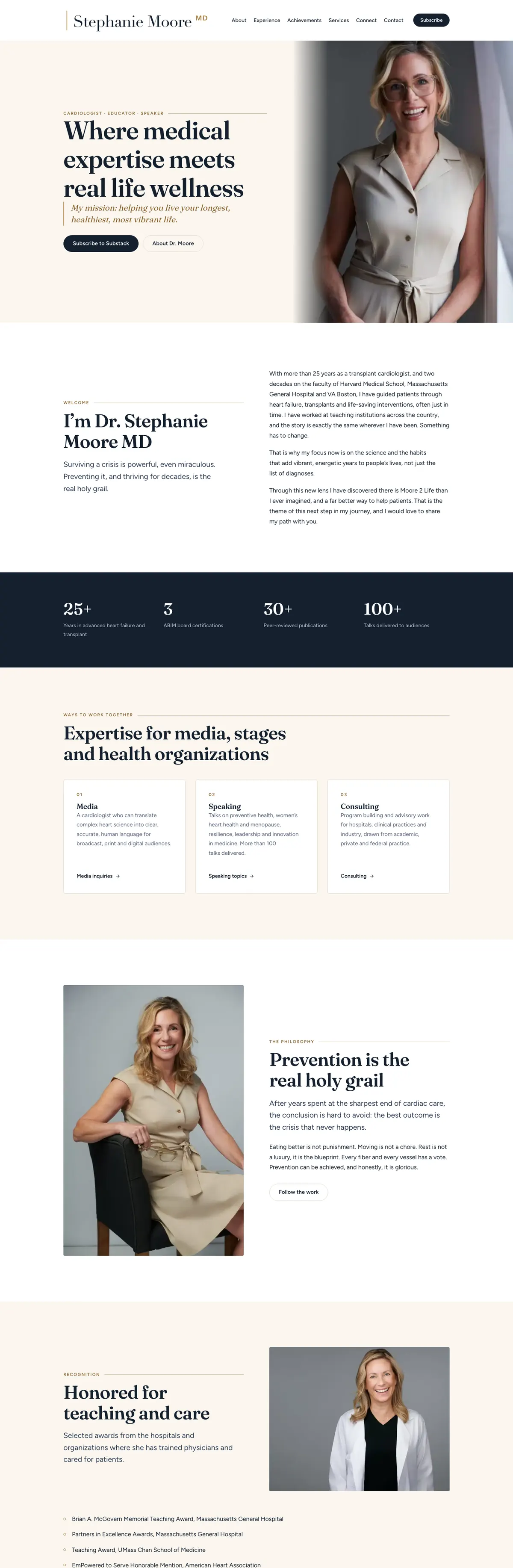
Dr. Stephanie Moore: easy to reach, with a clear boundary.
Dr. Stephanie Moore is a Louisville transplant cardiologist, educator and speaker. Her rebuilt website launched September 17, 2026 with seven pages, each with one job, and tagged, searchable PDFs of her biography, CV and media kit.
Its contact page offers direct email and a booking calendar for media, speaking and consulting, and says in plain words that these are not patient appointments and that no medical information should be sent. Every page was checked at five widths from 320 to 1440 pixels, with a mobile menu that traps focus properly. A dental or chiropractic site is a different site with the same habits.

What I will tell you up front.
No dental or chiropractic client yet
My healthcare proof today is one physician’s website. I will not show you another practice’s work and call it mine, and your site gets the same care hers did.
I do not build patient records
Intake, charting, records and telehealth belong in your practice software, under its business associate agreement. The website points patients there and stays out of the clinical data.
Not your compliance officer
I follow HHS’s published guidance and flag every decision that belongs with your compliance officer or attorney. The final calls about your patients’ data are theirs.
What dentists and chiropractors ask first.
Is a practice website HIPAA compliant?
No website is certified HIPAA compliant. What matters is what it collects, where that information goes and which vendors touch it. A site that keeps health details off its forms and ad tracking off its booking pages has far less to worry about.
Can new patients book online?
Yes, if your practice software offers online scheduling: the site links to it or embeds it. Otherwise a request-a-time form asks for a call back, which is more honest than offering slots nobody is watching.
Can the practice use Google Analytics or a Meta pixel?
On general information pages, with care. On booking pages, forms and anything behind a login, HHS guidance says the tracking vendor needs a business associate agreement, so I leave those tags off unless one is signed.
How should a practice reply to a bad review?
Thank the person, never confirm they are a patient or mention their care, and invite them to call the office. HHS has settled with a dental practice that disclosed patient information in its replies to online reviews.
Does the accessibility rule apply to a small practice?
It applies to recipients of HHS financial assistance, which the American Dental Association says includes Medicaid and CHIP dental providers. Recipients with fewer than 15 employees have until May 10, 2028, and larger ones until May 11, 2027. Building to the standard from the start is easier than retrofitting.
What does a dental or chiropractic website cost?
It depends on the number of treatment pages, how booking connects and whether new photography is needed. After one conversation you get a fixed written quote and a timeline.
Tell me how a new patient finds you today.
Tell me how booking works at your front desk and which visits you want more of. I will show you how the website fits around it and where the privacy lines fall, in a written scope.
Connect with me
Tell me about your practice.
What happens next
- 01I reply, usually the same day. Every message comes straight to me, not a ticket queue.
- 02A short call. What the site needs to do, who it is for, and what has not worked before.
- 03A written scope and flat quote. Before any work starts, with hosting and ongoing care listed separately.
5.0 on Google · 23 reviews · I usually reply the same day