About Us page examples, and how to write yours.
The About page is where a stranger decides whether there are real, trustworthy people behind your business. Here are About Us page examples that do it well, what each one gets right, and a simple outline for writing your own.
Or call or text (502) 387-1142


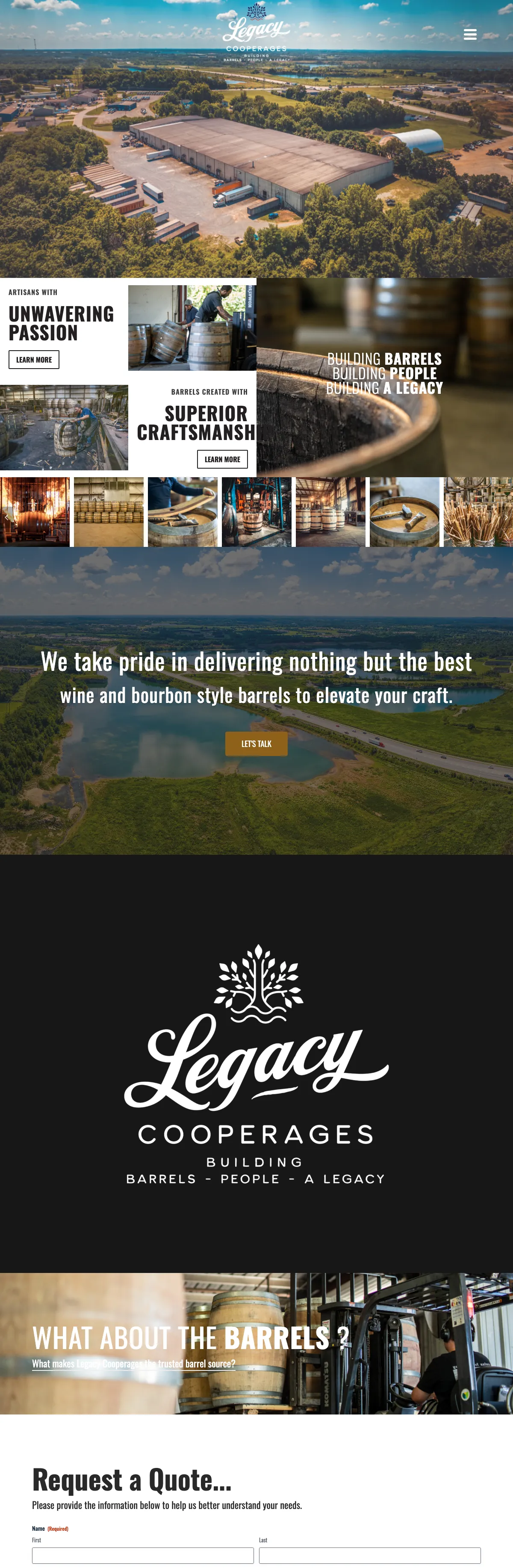
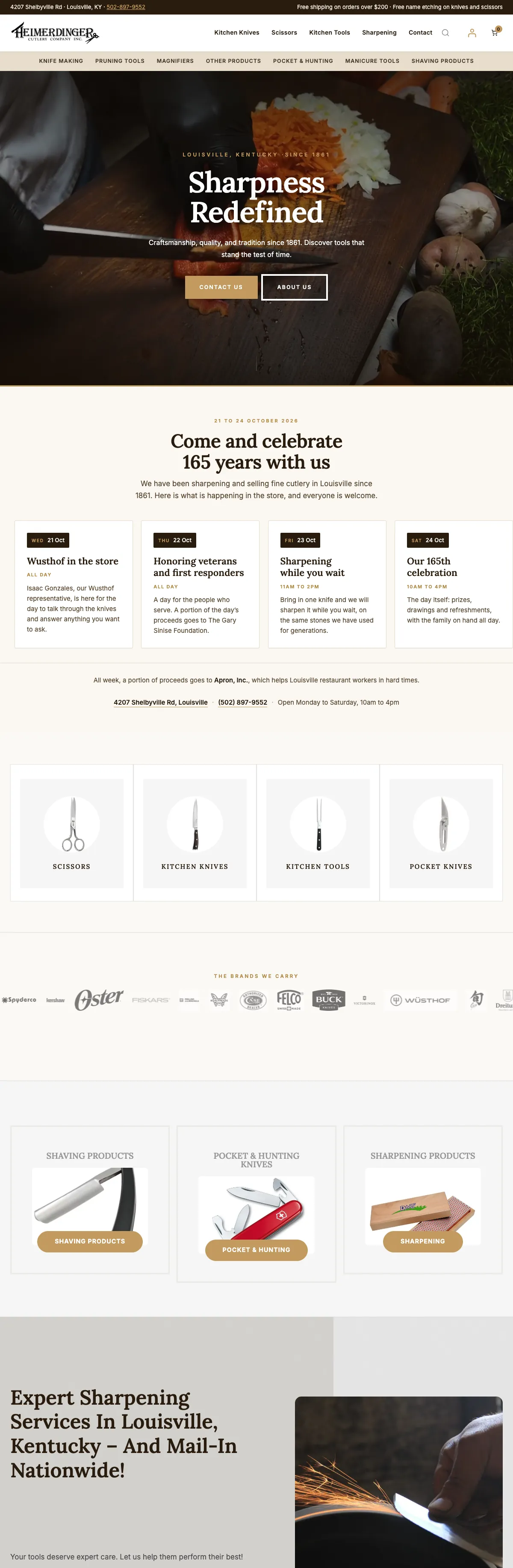
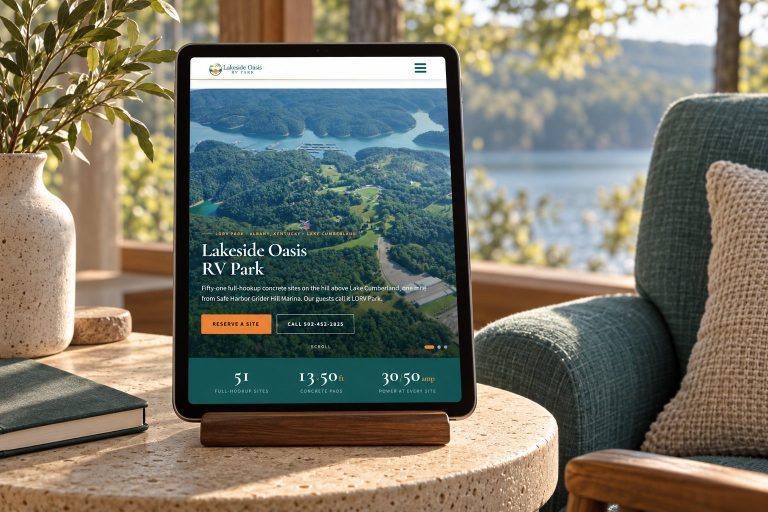
Websites I have built for Kentucky businesses


















The short answer
A good About Us page answers three questions a customer has before they call: who is behind this business, why should I trust them, and what do I do next. The best About Us page examples open with the customer’s problem or a concrete detail, use real names, dates and photographs, back up their claims with specifics, and end with a clear next step.
Below are eight examples worth studying, three of them from my own work, then an outline you can fill in for your own business.
What an About Us page is really for
Owners tend to write the About page for themselves: a history, a mission statement, a list of values. Customers read it for a different reason. They have found you, they are considering you, and they want to know whether you are real, whether you are good at this, and whether you are the kind of people they want to deal with.
That changes what belongs on the page:
- Who: real names and real faces, not a stock photo of a handshake.
- Why you: specific proof, such as how long you have done this, what you have built, who trusts you, and anything a third party can verify.
- How it works: what dealing with you is actually like.
- What next: a phone number, a form or a visit, right at the end, when interest is highest.
History and values belong too, but only as evidence for those four points.
Basecamp: a founder’s letter that starts with your problem
Basecamp’s About page is a letter from its co-founder and CEO, Jason Fried. It does not open with achievements. It opens with an admission: the company was a design firm that took on more work than it could handle, the quality slipped, and the clients noticed before the founders did. The tools they tried fell short, so they built their own. Clients asked to use it, and about a year after it launched, the product was earning more than the design business, so they stopped doing design work.
The letter ends with thanks, an invitation to try the product, and the founder’s name, title and own email address.
Borrow this: tell your story as the customer’s problem you set out to solve, admit what went wrong along the way, and sign it with a real name and a real way to reach you.
Mailchimp: one sentence that says what it is and who it is for
Mailchimp’s About page opens with a plain sentence about what the product does and for whom, before any history. The founding story is short: two founders running a web design agency started Mailchimp as a side project for small businesses in Atlanta, and it grew from there. Clearly labeled sections follow for culture, careers and the company’s community work, so a skimmer can jump to the part they came for.
It also refers to its founding as more than two decades ago, a phrase that stays true for years, instead of a count that goes out of date.
Borrow this: make your first sentence answer what you do and who you do it for. Then use the founding year, or a phrase like that, rather than a number of years that will be wrong next spring.
Bellroy: three facts and a hub
Bellroy, the wallet and bag maker, keeps its About page short. Under a one-line purpose sit three facts: it started around a kitchen table in 2010, its headquarters team comes from many countries, and it is a certified B Corp, with a link to the outside certification. Below that, tiles lead to deeper pages on its people, its materials and its responsible business work.
Borrow this: if your story is long, let the About page be a short summary with links to the detail. And wherever you can, link to proof someone else controls, such as a certification, a license lookup or your Google reviews.
Muth’s Candies, Louisville: names, dates and small true details
Muth’s has made candy in Louisville since 1921, and its story page is a model of specific, human detail. It names the founding couple, Rudy Muth and Belle Stengel, and the original five employees in a captioned photograph. It records that the first storefront opened on February 1, 1921, that the display cases were a dowry gift, that customers brought in their own sugar rations during the Second World War, and that interstate construction forced a move to the current East Market Street shop in 1962.
One line carries the company’s values without calling them values: a family member wanted employees to feel like family and customers to feel like friends. The page closes by thanking customers, employees and family, with the shop’s address and hours right below.
Borrow this: small, true details are what people remember. One dowry gift is worth more than a paragraph of adjectives.
Louisville Slugger Museum & Factory: a timeline with a photo for every year
The Louisville Slugger history page opens on an archival photograph from 1892 and tells you what to look for in it: a young Bud Hillerich in the doorway, the teenager who skipped work at his father’s woodworking shop and started the Louisville Slugger story. From there it runs as a dated timeline, each year with its own photograph, from the family’s arrival in America to the move into the current downtown headquarters.
It is also honest about legend. On the famous story of the first professional bat, the page says there is some debate over the origin story.
Borrow this: if you have a long history, show it as a timeline of dated moments with a picture for each. And if part of the story is legend, say so; it makes the rest more believable.
About Us page examples from my own work
Three examples from my own work, each labeled for what it is.
- My own About page. It opens with one line, I’m Shaun Wilson, one person, every discipline, then covers six chapters of a career from broadcast television to drones and 3D printing. A section of plain facts states the founding year, what I do and where, and a section on how working together goes explains the practical side of hiring one person: you get one number, nothing is subcontracted, and the calendar sometimes has a wait. Read it here.
- Dr. Stephanie Moore’s About page (a site I built). It introduces a transplant cardiologist, educator and speaker in her own voice, and puts her professional biography and CV one click away as proper PDFs, because journalists and event organizers, who need exactly those files, are among the people reading it. See the project.
- The Island Earth story page (the store I built and run). A gift store with more than 3,800 products still needs a reason to exist beyond its catalog, and this page gives it one. More on it below.
The common thread: each page is written for the person most likely to read it, and gives them the next thing they need.
How to write your About Us page: a simple outline
You can write a good About page in an afternoon with this outline. Fill in each part in plain words, then cut anything that does not help a customer decide.
- The opening line. Who you help, with what, and where. One sentence.
- The story, in three to five beats. Why you started, a turning point, what you learned, where you are now. Use years and names. Include one small true detail.
- The proof. How long, how many, for whom, and anything a third party can confirm: licenses, certifications, reviews, awards, notable clients who have agreed to be named.
- The people. Real photographs with names and roles. If it is just you, say so; for many customers that is the selling point.
- How you work. What happens after someone gets in touch, and what you will not do.
- The next step. A phone number, a short form or directions to visit, at the bottom where interest peaks.
A few rules of thumb:
- Write the founding year, not a count of years. Counts go stale; a year never does.
- Use first person if one person runs the business. It is honest, and it is warmer.
- Describe photographs in their alt text, so screen readers and search engines know who is pictured.
- Keep it current. Out-of-date team photos and old milestones quietly tell visitors nobody is minding the site.
If you are rebuilding the whole site, I can write the About page with you, alongside the service pages. See small business website design, or browse the best small business websites for more ideas.
Frequently asked questions
What should an About Us page include?
Who is behind the business, why a customer should trust you, what working with you is like and a clear next step. Real names, real photographs, specific proof and a phone number or form at the end do most of the work.
How long should an About Us page be?
Long enough to answer who, why and what next, and no longer. For most small businesses that is a few hundred words with photographs. A long history can live on its own page, linked from the About page.
Should an About page be written in first person?
If one person runs the business, yes. It is honest and it reads warmer. A larger team can write as the company, as long as real names and faces still appear.
Should I put my photo on my About page?
Yes. A real photograph of the owner or the team is one of the strongest trust signals a small business has. Use a recent one, and name the people in it.
What is the difference between an About page and a story page?
An About page answers who you are and why to trust you. A story page tells the history in more depth. Small businesses usually need one page that does both; larger ones can split them and link between the two.

A story page that explains the name.
The Island Earth is my own 3,800-product store, and a shop about dads, dogs and lake houses needs a reason to exist. Its story page explains why it is called The Island Earth, so the store reads like a real company, because it is one.
It shares one palette and one type system with every product page, so a visitor who lands on the story from a search meets the same brand they would meet at checkout.
Stuck on your About page?
Send me the page you have now, or the notes you have not turned into one. I will tell you what to keep, what to cut and what to add, from the person who would write it with you.