Plumbing websites that make it easier to ask for help.
A plumbing customer often starts with a problem, not a service name. Your website should help them recognize the right service, understand your coverage and contact your business without unnecessary steps.
Six jobs, before it does anything clever.
Every plumbing website we build is organized around these six jobs. The design comes after.
Give each service room to explain itself
Drain cleaning, water heaters, repairs and commercial work do not answer the same questions. A useful service page explains the situations you handle, the information customers can share, and how to start a conversation.
Put the next step within reach
A readable phone button and a short route to the request form matter on a small screen. The number is the primary call to action on every page, not a footer detail.
Show where you work
Service-area content should reflect your real coverage. A city page earns its place when it helps people in that area understand your services and contact options. Swapping the city name across dozens of identical pages adds nothing.
Use proof that belongs to your business
Your trucks, your job photographs and your real customer feedback help visitors understand who they are contacting. Captions stay honest about whether a photograph shows a finished job, a condition being inspected or an illustrative scene.
Ask the right questions up front
Forms can show relevant follow-up questions after a service is selected and accept photographs that help explain the problem, so the crew arrives with the right parts.
Measure what matters from day one
Search Console, a submitted sitemap, and analytics events for phone clicks and form submissions, so you can see how people get in touch instead of guessing.

Eight services, one hub, a clear next step on every page.
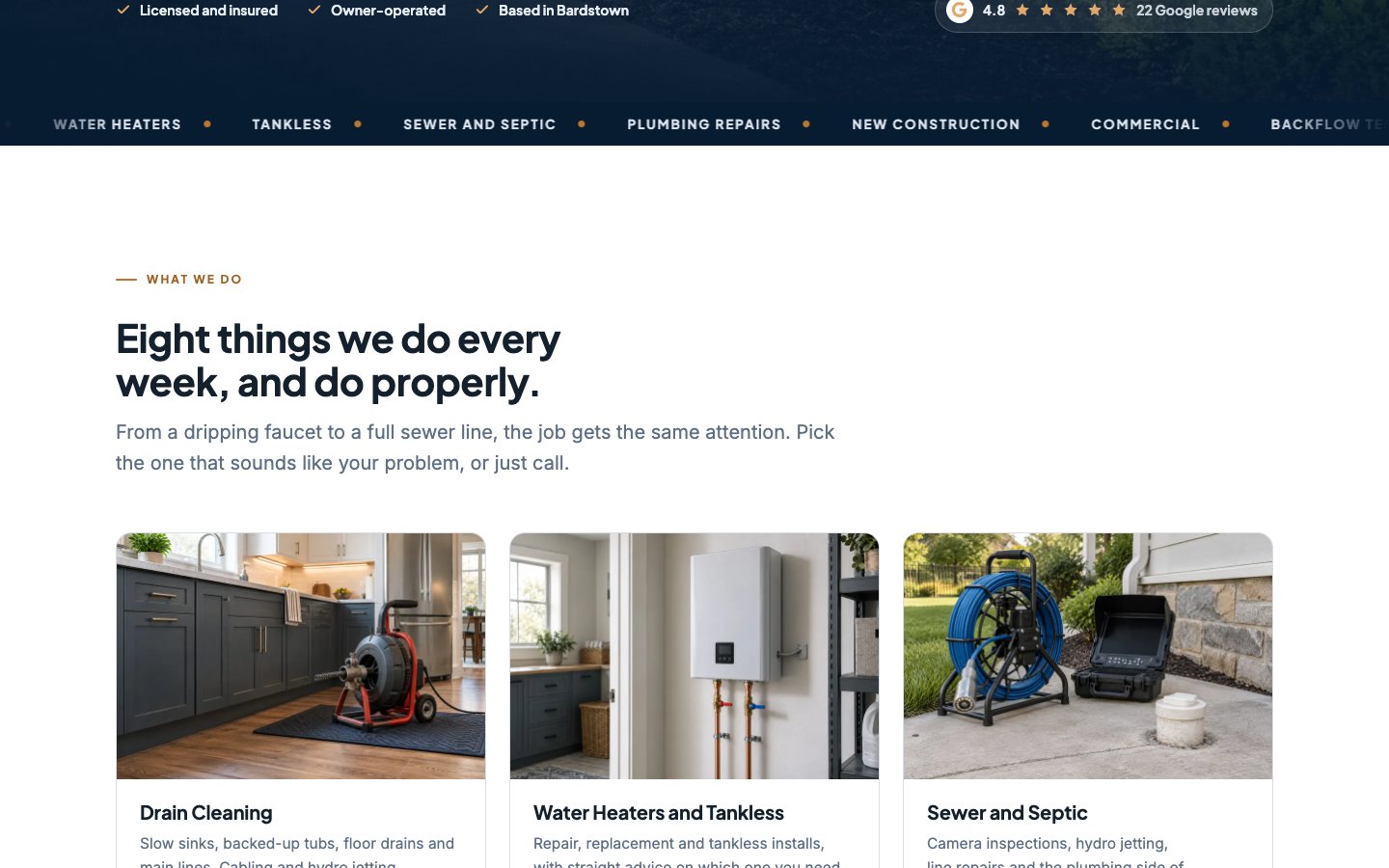
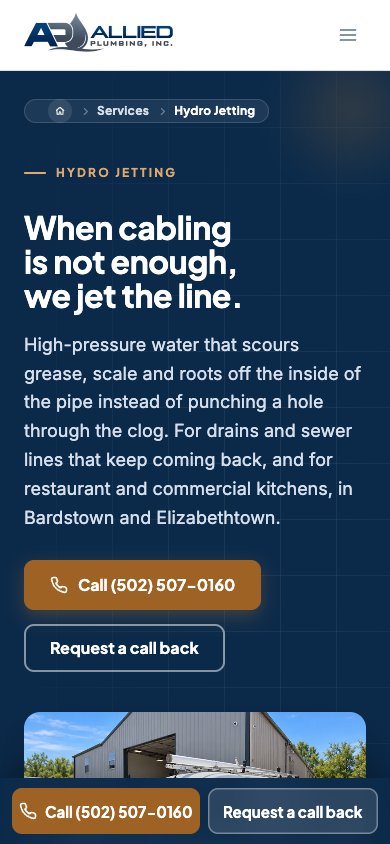
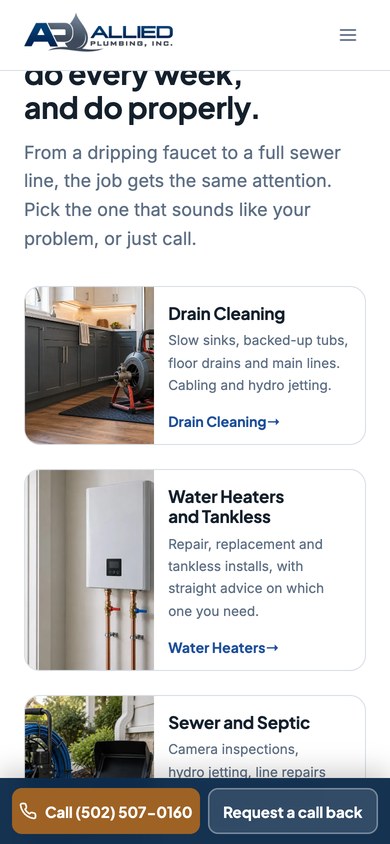
Allied Plumbing is an owner-run company in Bardstown that wanted its growth market, Elizabethtown, to find it online. The site gives each of its eight services a dedicated page, a hub for people who cannot name the service yet, and a phone number that is always one tap away.
Symptoms first, then what the visit looks like.
Each Allied service page opens with a symptom checklist, walks through what happens when the crew shows up, explains the things that move the price without quoting numbers, adds a local note about the water and the housing stock, and ends with the questions customers ask on the phone.
It reads like the owner explaining the job, because that is where the copy came from.


One Elizabethtown page that says something.
Allied is based in Bardstown and works Elizabethtown and Hardin County every week, so the Elizabethtown page talks about that county: the newer subdivisions along the corridors, the older ranches, the towns around it, the hard water. It links every service and carries the same form. It is not eight services multiplied by ten towns.
Questions that change with the problem.
Pick a water heater and the form asks tank or tankless, gas or electric, and how old. Pick a drain and it asks which drain and whether anyone has used a chemical cleaner. Photos are optional, the town or ZIP is required, and sending it asks for a call back rather than pretending to book a visit.
We wrote up the thinking behind it in a guide to better request forms for service websites.

8
service pages on the Allied Plumbing site
18
public pages live on launch day
2
conditional forms: requests and applications
1
person to call about all of it
Four steps from first call to launch.
Listen
Your services, the places you cover, the calls you want more of, and what the current website gets in the way of. We map the pages and the contact paths around that.
Write and design
Service pages written from how you explain the job on the phone, a design built on your brand and your trucks, and a request form shaped around the visit.
Build and photograph
WordPress on Kadence, fast on a phone, with your real photographs placed with honest captions. Aerials of your town if it helps tell the story.
Launch and measure
Search Console, sitemap, Business Profile link, and events for phone clicks and form submissions, so the first month tells you something.
What plumbers ask before they hire us.
Can you use our existing photos?
Yes. We review the available files and their context before deciding where they fit, and the captions say what a photograph actually shows.
Can we expand later?
Yes. The initial plan leaves room for additional services and useful supporting content, such as articles that answer the questions your customers ask.
Does a new website guarantee leads?
No. A useful site gives customers a better place to learn about you and contact you. Results also depend on demand, visibility and how inquiries are handled once they arrive.
Do you write the copy?
Yes. Every service page on the Allied site was written from conversations with the owner and checked against what the company actually does.
Do you handle the Google Business Profile?
We connect the website to it, get the categories and service list in order, and set up the review link. The profile itself stays in your account.
Who hosts it, and who do I call?
We host it and keep it updated, and you call the person who built it.

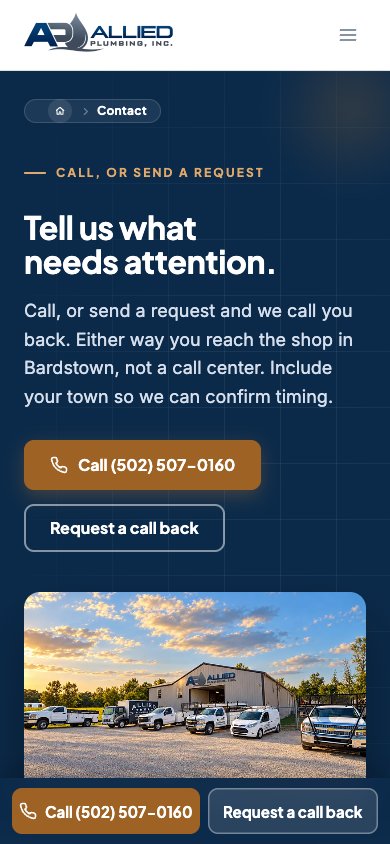
The Allied Plumbing site on a desk, and in a hand.
See the whole build in the Allied Plumbing case study, or the wider approach on small business website design.
Tell us about your services and the places you cover.
Tell us what your current website gets in the way of. We can map the pages and contact paths around the business you actually want.