
A retail store website that sells what is on your shelves, without counting it twice.
Your shop already has the stock, the know-how and customers who come back. A retail store website should put that counter online, with inventory that stays in step with your register, so a sale in the shop and a sale on the site rarely fight over the last one.
Or call or text (502) 387-1142
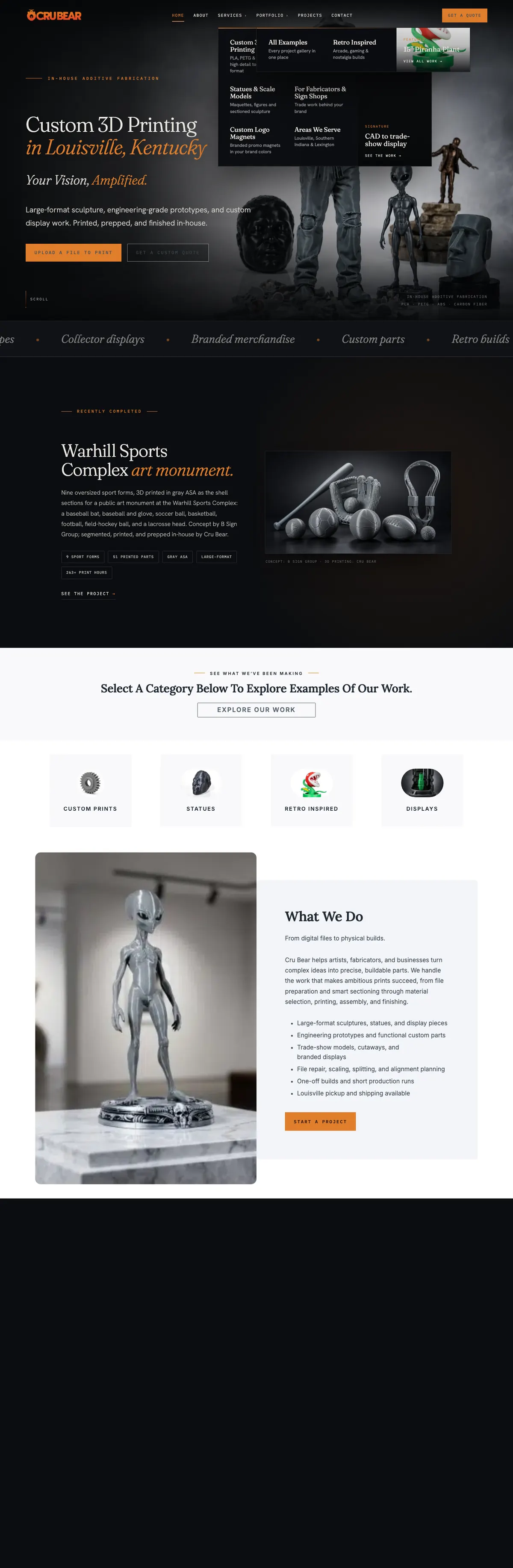



Websites I have built for Kentucky businesses


















Two inventories is where independent retail goes wrong online.
The common trap is two lists of products: the one in the register and the one on the website. Someone updates the site on Monday morning, the shop sells the last two on Tuesday, and on Wednesday a customer two states away buys one you no longer have. The refund is the easy part. The customer who will not try again is the cost.
Online is still the smaller share of the business. The Census Bureau estimated, in its quarterly e-commerce release of August 18, 2026, that e-commerce made up about 17 percent of US retail sales in the second quarter of 2026, seasonally adjusted. Your shop’s strength is in person, and the website’s job is to extend it, keep its count honest, and send people through the door.
A retail store website built for a shop with a counter.
One inventory, register first
A sale at the register lowers the count on the website on a schedule you can check. Online orders flow back to the register when your operation is ready for two-way sync.
Buy online, pick up in store
Local pickup at checkout for customers who live nearby, with a ready-for-pickup email, so the website brings people through the door.
In stock nearby, on Google
With accurate local inventory, Google’s free local listings can show which products are on your shelves in Search, Maps and your Business Profile.
A catalog people can browse
Categories that explain a range before they list it, filters that fit how your customers shop, and search that finds the brand and the model number.
The services behind the counter
Repairs, sharpening, fittings, classes and special orders presented as services people can book or buy online, each with its own page.
Product photos that agree
Real photographs with consistent framing, shot or cleaned up so a category page reads as one store instead of a pile of supplier images.
A Louisville shop since 1861, with about 1,000 products online.
Heimerdinger Cutlery is a family-owned Louisville retailer that has served the city since 1861. I built its WooCommerce store and have run it since: about 1,000 products across 176 categories, live UPS rates at checkout driven by real product weights, a Google Merchant Center feed, and the shop’s local drop-off and mail-in sharpening turned into services customers can book and buy.
The second phase added category pages that explain a range before they list it, a product gallery with an inspector that magnifies the real photograph, a cart drawer that reads the live free-shipping threshold, and a proper page for sharpening. Same identity customers know from the shop, more help once they are inside the site.


A gift shop register and a website that share one count.
Kentucky Peerless runs a Clover register in the distillery gift shop and sells the same merchandise online. I wrote a custom plugin that talks to Clover’s own platform and updates the website’s inventory every hour, so a hat that sells out at the counter stops selling online within the hour.
It replaced a third-party sync subscription whose quiet mismatches had to be traced SKU by SKU. Now the register is the source of truth and the website follows it. That is the order I recommend for any shop: clean up the SKUs, sync from the register, then add write-back when you are ready.
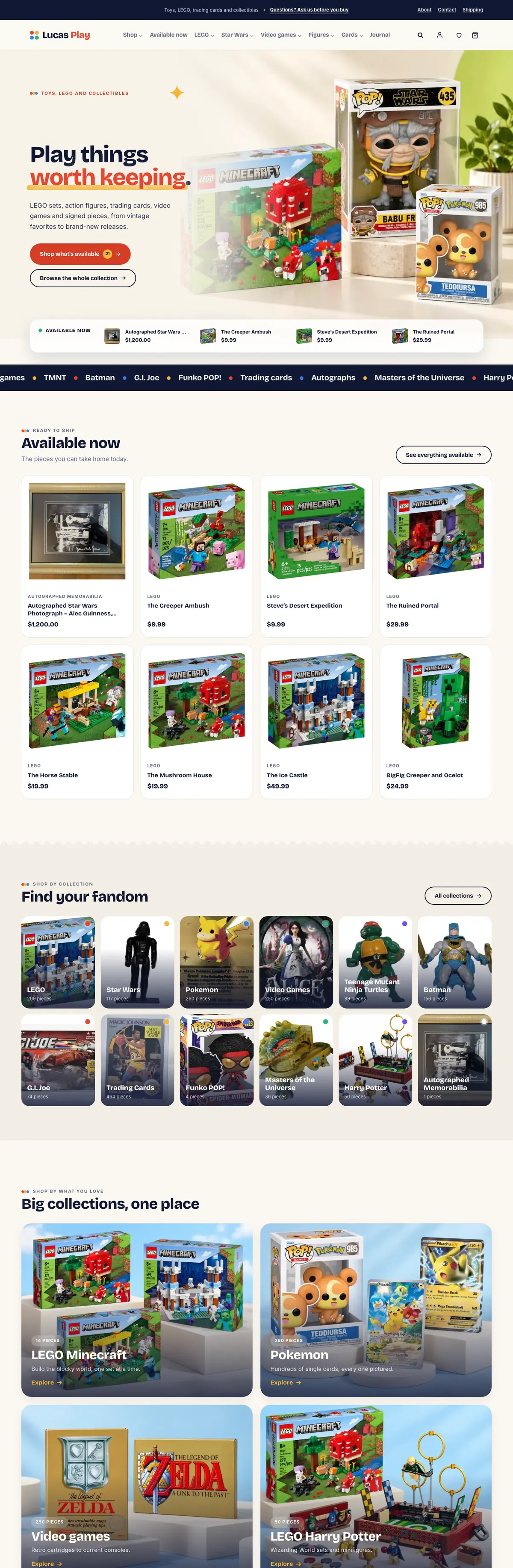
1,374 toys and collectibles, available pieces first.
Lucas Play sells toys, LEGO sets, vintage action figures, trading cards and signed collectibles. Its catalog had grown to 1,374 listings on an older store. I moved every product, all 1,763 photos and every category without losing one, then rebuilt the shop around how collectors browse: in-stock pieces first, pages by decade, and a details card with maker, line, year and condition.
Sold pieces stay as a browsable archive with a want list, so a collector can ask for the one that got away. For a shop full of one-of-a-kind stock, that turns a sold-out item into a reason to get in touch.

Which platform, if you already have a register?
The honest answer starts with the register you already use.
- On Square? The official Square extension for WooCommerce keeps product names, prices and stock levels synced between the two. If its rules fit your catalog, use it. I build custom sync when they do not. See Square and WooCommerce sync.
- On Clover? Clover’s own platform has an API, and that is what the Peerless sync is built on. See Clover and your website.
- Want one vendor for everything? Shopify sells its own POS that keeps counter and online orders in one system, on Shopify’s monthly plans and on Shopify’s terms. I compared the two for Louisville stores in WooCommerce vs Shopify, and the store fee calculator estimates what each would cost on your sales.
Whatever you choose, audit the SKUs first. Most sync problems are catalog problems: duplicate items, mistyped codes and products that exist on one side only. Sync built on bad SKUs just spreads them faster.
Before you put the shop online.
Not every shop needs a cart
If every item is one of a kind or stock turns over by the hour, a well-photographed catalog with call to reserve may serve you better than checkout. I will tell you which fits.
Shipping is a decision
Weights, boxes and zones decide whether an online order makes money or loses it. Heimerdinger quotes live UPS rates from real product weights, so the shipping charge matches the box.
Orders take staff time
Online orders need someone to pick, pack and answer email. Plan for that before launch, or start with local pickup only and grow from there.
What independent retailers ask first.
Can my website and my register share one inventory?
Yes. A sale at the register lowers the website’s count on a schedule, and the results can be checked instead of taken on faith. Clover runs in production today, Square has an official WooCommerce extension, and most modern POS systems have APIs that can be connected.
Can customers buy online and pick up in the store?
Yes. Local pickup can be offered at checkout, with an email to the customer when the order is ready.
How do I get my in-store products on Google?
Google’s free local listings show in-store products in Search, Maps and your Business Profile when you send local inventory data through Merchant Center. They only help if your counts are right, which is why the register sync comes first.
Will I have to enter every product twice?
No. The point of the setup is one list. Depending on your register, products are matched by SKU or barcode on both sides, after an audit that fixes duplicates and mistyped codes.
Can you move my existing online store?
Yes. Lucas Play moved 1,374 products and 1,763 photos from an older WooCommerce store, each keyed to its original listing and reconciled before launch.
What does a retail store website cost?
It depends on the size of the catalog, the register and how much syncing it needs. I quote from a written scope after looking at your products and your POS.
Tell me what is on your shelves.
Send me your shop’s website, your register brand and roughly how many products you carry. I will tell you how I would put your counter online.
Connect with me
Tell me about your shop.
What happens next
- 01I reply, usually the same day. Every message comes straight to me, not a ticket queue.
- 02A short call. What the site needs to do, who it is for, and what has not worked before.
- 03A written scope and flat quote. Before any work starts, with hosting and ongoing care listed separately.
5.0 on Google · 23 reviews · I usually reply the same day