
A fractional CTO for a business too small to hire one.
You have a problem. I build what solves it. For owners who need one person to own the technology: the website, the register, the bookings, the inbox and the way they fit together, without a full-time salary or an agency in the middle.
Or call or text (502) 387-1142




Websites I have built for Kentucky businesses


















Someone who owns the technology, part time.
A chief technology officer decides what software a business uses, how the pieces connect and who fixes them when they break. Large companies hire one full time. A small business usually has nobody in that seat, so the decisions get made one vendor sales call at a time.
A fractional CTO does that job for part of a month. With me there is one difference that matters: I also build the fixes. The person who maps the problem is the person who writes the code, sets up the connection and answers the phone when something stops working. What I offer a small business is hands-on technical ownership and implementation, not executive strategy, hiring or board-level governance for a growing tech company.
The jobs a technology partner handles.
Build, buy or keep
Plain comparisons of the options, written down, before you sign up for anything. Sometimes the right answer is an off-the-shelf tool and no custom work at all.
Systems that talk to each other
Register, store, calendar, inbox and spreadsheets connected, so nobody copies stock counts, bookings or orders across by hand.
The missing piece
Custom WordPress plugins and small tools for the rule your business runs on that no product has a checkbox for.
Work off your plate
Inquiries sorted and replies drafted for your approval, so nothing goes to a customer that a person has not read.
Accounts, access and backups
Who owns the domain, where the backups live, who has admin access, and what happens if a vendor disappears.
Watched and written down
Monitoring, updates when a service changes, and a written record of how everything works, so nothing depends on one person’s memory, including mine.
Kentucky Peerless: the store, the register, the tours and the front desk.
I handled creative marketing for Kentucky Peerless Distilling Co., running brand, web and marketing from the client side while also building the systems behind them. The problems arrived one sentence at a time, and each got its own fix.
The register said one count and the website another, so I wrote a plugin that syncs the Clover register with the store every hour and holds a doubtful product match for a person to confirm. Tour guests arrived with printouts, so the front desk got a check-in board with one-tap check-in, walk-ins and attendance reports. The paper guest book became a tablet kiosk that saves every signup to the site first and the mailing list second.


HogMatch: a marketplace rebuilt from its data up.
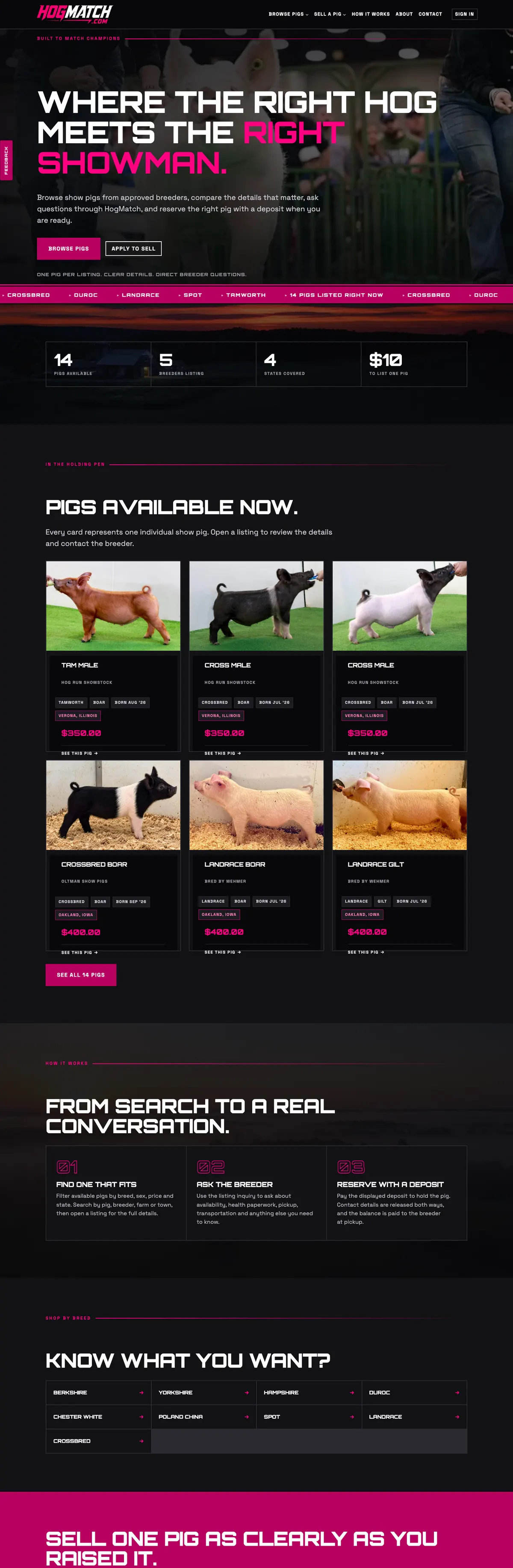
HogMatch began as a WordPress prototype carrying 45 active plugins and duplicate listing models. The fix started with the data: one record per pig, then a buying journey, controlled seller tools and deposits through PayPal at checkout. It went live in September 2026.
Buyers need to see a pig walk, so breeders upload a clip filmed in the barn and the server converts the phone video for the web before it plays on the listing. That is the job in miniature: hear the problem, find the smallest piece of software that solves it, and make it run without anyone thinking about it.
Signs you need a fractional CTO
Most small businesses do not need a technology executive. Some quietly do, and the signs tend to look like this:
- Staff copy the same information between two or three systems every day.
- Nobody can say with confidence who owns the domain, the hosting account or the ad accounts.
- You pay for software subscriptions nobody uses, and you are not sure which ones are safe to cancel.
- A vendor is pitching a new platform and you have no one to ask whether you need it.
- The person who built your website or set up your systems has moved on, and so has the knowledge.
- A process runs on one employee’s spreadsheet, and everyone worries about what happens when they are on vacation.
If two or three of those sound familiar, the fix usually starts with a written map of what you have, then the one problem that costs the most time. That is where I start too. I monitor the sites I host myself, with a check every 60 seconds that alerts my phone, so I know what it takes to keep systems running after the build.
How a technology partnership runs.
Start with the problem
A first conversation about what slows the business down, in your words. You do not need a software list.
Map what you have
Every system, account and login written down: who owns it, what it costs and what talks to what.
Fix in order
The problem that costs the most time or money first, built small and tested on real examples before anyone relies on it.
Stay on call
Ongoing help on a schedule that fits the business, for decisions, fixes and the next project, with one person to call.
What this is, and what it is not.
What I am
A builder who thinks like a CTO, for businesses with a handful of systems and no technology staff.
Not office IT
Office computers, printers and networks are a different trade. If that is what you need, I will tell you so and suggest you find a managed IT provider.
Not tied to one platform
WordPress when it fits. Anything else with an API, a webhook, an export or a shared inbox when it does not.
Fractional CTO, answered.
What is a fractional CTO?
A part-time technology lead. They decide what software a business uses, how it connects and how it is kept running, for a fraction of the time and cost of a full-time hire. What I offer is the small-business version: technical ownership and implementation, where the same person also builds the fixes, rather than executive strategy, hiring or governance work.
Does a small business need one?
If you run several systems, nobody understands how they connect, and staff copy information between them by hand, it is worth a conversation. If your website is the only software you use, a good web developer is enough.
How is this different from hiring an agency?
An agency sells you its services. A technology partner tells you which ones you need, including when the answer is a cheaper off-the-shelf tool, and in my case builds the custom parts too.
Do you only work with Louisville businesses?
No. I am based in Louisville, Kentucky and work with clients across Kentucky and Southern Indiana, and remotely anywhere in the United States.
Who owns what you build?
You do. It runs in your accounts wherever possible, the code and data are yours, and each system is written down so another developer could pick it up.
How much does a fractional CTO cost?
It depends on how much there is to look after and build. After a first conversation you get a written scope with the number in it, before anything starts.
Bring me the problem.
Tell me what keeps going wrong, in your own words. You get a straight answer on whether it can be fixed and what it would take, from the person who would build it.
Connect with me
Tell me what is eating your time.
What happens next
- 01I reply, usually the same day. Every message comes straight to me, not a ticket queue.
- 02A short call. What the site needs to do, who it is for, and what has not worked before.
- 03A written scope and flat quote. Before any work starts, with hosting and ongoing care listed separately.
5.0 on Google · 23 reviews · I usually reply the same day