HOW THE WORK GETS DONE
Weather, windows and getting the shot: How a monthly progress flight gets scheduled
Monthly progress photography sounds like a calendar entry. In Kentucky it is closer to a standing agreement to find the right two hours in a thirty day window. Here is how that actually works.
CADENCE
Weekly, monthly, or one time
COVERAGE
Kentucky and Southern Indiana
PILOT
FAA-Licensed
CAPTURE
4K video and full resolution stills
THE HONEST VERSION
Nobody can promise you the third Tuesday
A lot of aerial work is sold as though weather is somebody else’s problem. It is not. Wind moves an aircraft, rain grounds it, and flat grey light turns a good composition into a photograph nobody wants to put in a report. Any of those can land on the day you picked.
So the commitment worth making is not a date. It is a window, plus the judgement to spend it well. On a monthly project that means I am watching the forecast for your site, not waiting for you to call and ask where the photos are.
WHAT MAKES A GOOD DAY
Three things have to line up
Wind decides whether the aircraft is stable enough to be worth flying. Cloud decides whether the site has any shape to it. And the sun decides whether the building casts the shadows that make a roofline readable at all.
When all three cooperate, one flight produces a set that needs almost no work afterward. When they do not, the honest move is to wait a day rather than deliver something flat and call it done.
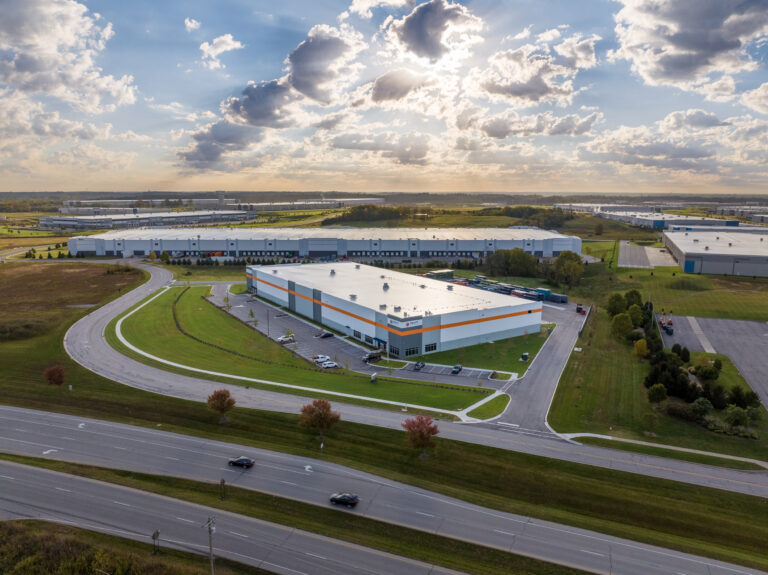
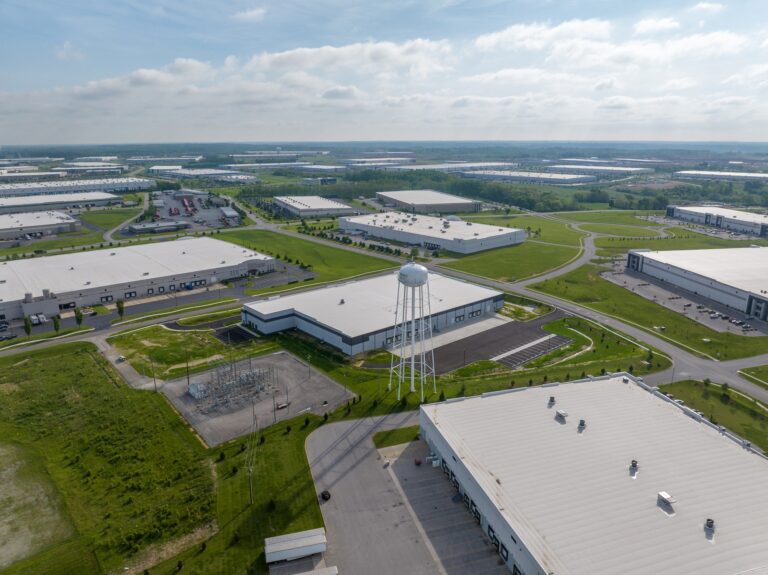
Clear light: the roof structure and the site layout both read in one frame.
SEASONS IN KENTUCKY
The same site photographs differently in February and July
Winter
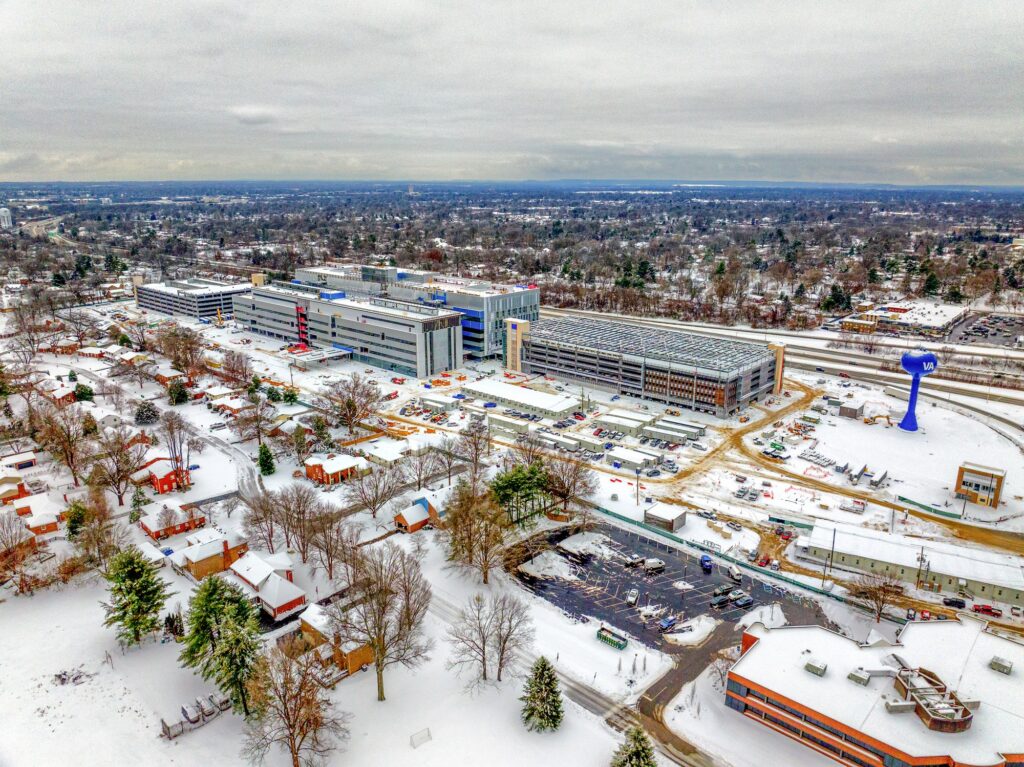
Bare trees and low sun. The best time of year for site context, because you can actually see the ground, the access roads, and the neighbouring parcels.
Spring
The least predictable stretch. Long rain periods and fast moving fronts mean the window inside a month can be genuinely narrow.
Summer
Long days and reliable light, but heavy foliage hides site edges and midday sun flattens everything. Early and late are worth the trip.
Autumn
The easiest conditions of the year. Stable air, good colour, and long shadow angles through most of the working day.
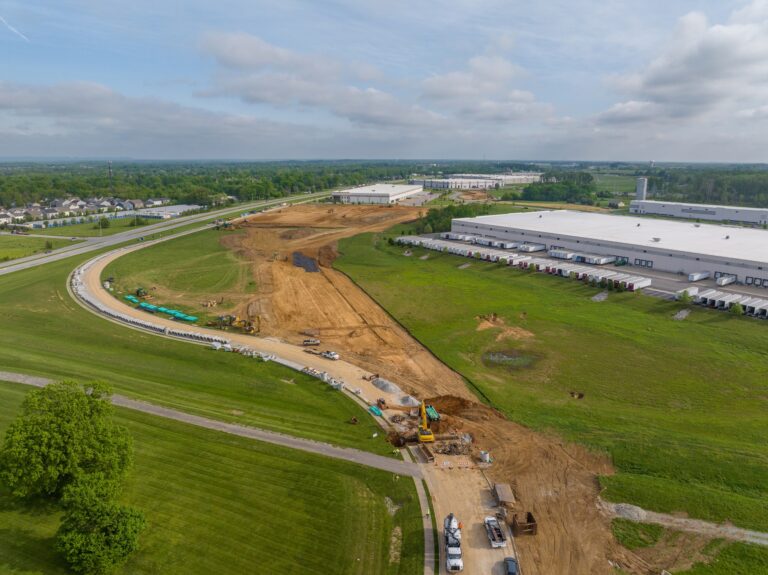
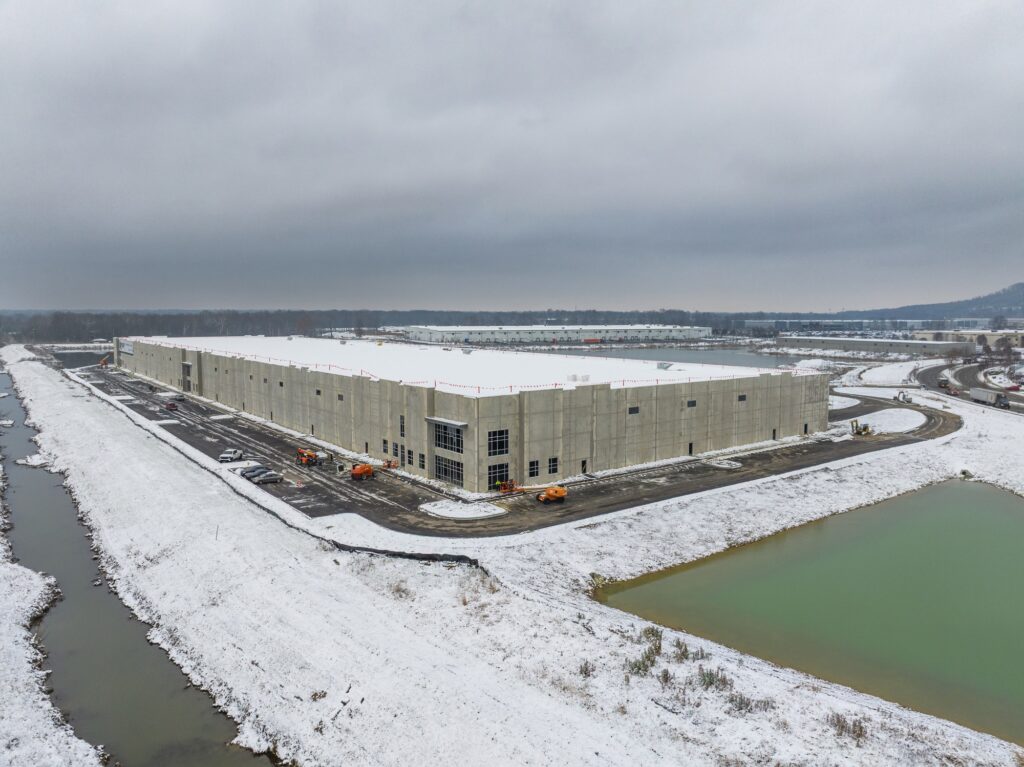
Flat overcast: technically a photograph, practically not worth adding to the record.
WHEN A MONTH GETS AWAY
What happens if the window closes
Occasionally a month simply does not offer a flyable day that lines up with the site. When that happens you hear about it from me before the month ends, not after.
The usual answer is to shift the flight a few days into the next month and keep the sequence intact, because a progress series is only as useful as its continuity. Skipping a month quietly is the one outcome worth avoiding.
WHAT RELIABLE ACTUALLY MEANS
A standing arrangement, not a booking
The projects that get the most out of this are the ones set up as an ongoing arrangement rather than a series of individual jobs. I know the site, the access, the airspace situation, and where the good angles are, which means less of your time spent explaining and more of the window spent flying.
If you want the full picture of how the monthly work is structured, the construction progress page covers deliverables and cadence, and drone mapping covers the measurable side.
WHAT ACTUALLY GROUNDS A FLIGHT
The conditions that decide, in order
Wind comes first, and not because of the aircraft’s rated tolerance. A drone can hold position in more wind than it can hold a steady frame in. The limit that matters in practice is the point where the gimbal is working hard enough that fine detail smears, which arrives well before anything feels unsafe.
Precipitation is a hard stop rather than a judgement call. Cloud is the interesting one: a high thin overcast is genuinely good light for a jobsite, because it opens up the shadows inside a structure without flattening the whole scene. A low grey lid is the problem, and the two look similar from a car park.
Then there is the site’s own schedule, which overrides all of it. There is no point spending a perfect window photographing a day when nothing is happening. The most useful flight of the month is often two days either side of where the calendar said it should be.
COMMON QUESTIONS
Scheduling in practice
How much notice do you need?
For a site already on a monthly arrangement, very little, because the planning is already done. For a first visit, a few days is comfortable, mostly so airspace and site access are settled before rather than on the day.
Can I book a specific date for a groundbreaking or topping out?
Yes, and events are the exception to everything above: they happen when they happen, so the flight is committed to the date and the weather is simply accepted. Worth knowing that the pictures may be honest rather than flattering.
What if I need the photos by a deadline?
Say the deadline up front. It changes the plan, usually by building in a second candidate window earlier in the month rather than relying on one attempt.
Do you charge for a trip that gets weathered off?
No. If conditions make the flight pointless it moves, and that risk sits with me rather than with your project.
MONTHLY PROGRESS DOCUMENTATION
Put your site on a standing schedule.
Serving Louisville, Lexington, and Southern Indiana. Flown by Aerial Photography Louisville.